
1½" Wood Screws at a Glance
A 1½" wood screw is the most versatile length in a beginner's kit. It works for face frames, drawer boxes, shelf cleats, and most ¾" material assemblies. The one rule that makes it simple: the screw should penetrate the base piece by at least ⅔ its thickness. For most beginners, #8 gauge with a flat head and square (Robertson) drive is the right buy — it drives clean, sits flush, and never cams out.
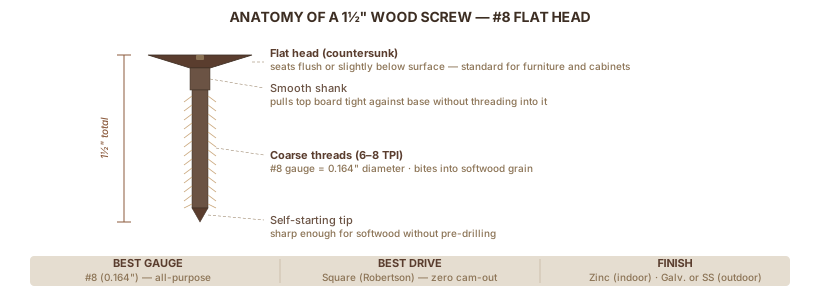
| Most common gauge | #8 (0.164" diameter) — works for cabinets, shelves, furniture |
| Best drive type | Square (Robertson) — zero cam-out, one-handed driving |
| The ⅔ rule | Screw must penetrate base piece by at least ⅔ its thickness |
| Two ¾" boards stacked | Use 1¼" — not 1½" (blowthrough risk) |
| Pocket holes, ¾" stock | Use 1¼" Kreg screws — 1½" is wrong length here |
| Indoor projects | Zinc-plated fine / Outdoor: galvanized or stainless |
In this guide:
- Reading the label — gauge, head, and drive type
- The two-thirds rule for choosing length
- Projects where these screws belong
- Pilot holes and mistakes to avoid
Part 1: Reading the Label
Same length, twelve different boxes.
Gauge — the number that tells you diameter
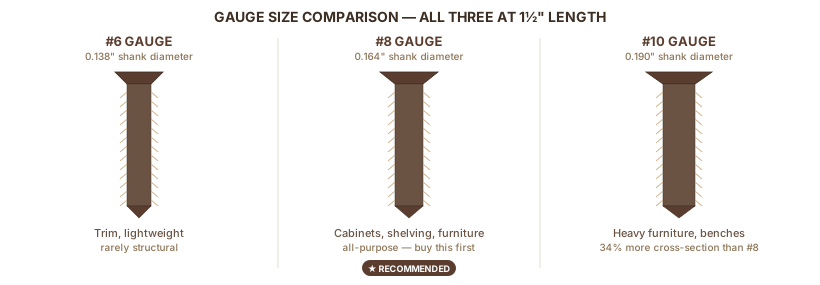
Gauge is diameter. Higher number means thicker screw. Three gauges show up in 1½" wood screws:
#6 (0.138"): Trim work and lightweight applications. Rarely the right call for structural joinery.
#8 (0.164"): The all-purpose size. Strong enough for cabinets, furniture, and shelving. Available everywhere. This is the one to buy for most beginner projects.
#10 (0.190"): AFT Fasteners' screw specs put this gauge at 34% more cross-sectional area than #8 — noticeably more holding power. Use it for workbench aprons, heavy furniture, or anything that takes regular load.
Thread pitch matters too. Standard wood screws come coarse or fine:
- Coarse pitch (6–8 threads per inch): bites aggressively into softwood — pine, cedar, fir. Faster to drive.
- Fine pitch (10–14 TPI): more thread engagement per inch in hardwood — oak, maple, walnut. Also better for MDF and particleboard, which have no grain to grip.
Most boxes at big-box stores don't specify pitch clearly — the coarse version is the default for softwood projects, which covers most beginner work.
Head types — what sits at the top
The head shape determines how the screw sits in the wood.
Flat head (countersunk): Tapers to a point, designed to seat flush with the surface or slightly below. This is the standard for cabinetry and furniture. Buy flat heads for most projects.
Bugle head: Similar taper but with a curved underside — designed for drywall and decking. Not the right choice for furniture or cabinets.
Pan head: Rounded top, flat underneath. Sits proud of the surface. Good for attaching hardware, not for finished woodwork.
Round head: Protruding dome. Used for hinges and locks. Don't grab these by accident.
For 99% of beginner woodworking: buy flat-head screws and countersink them flush. That's the look you're after. See Countersink Drill Bits for the full guide on sizing and using the bit.
Drive types — what you put the bit into
The drive type is the shape on top. Pick wrong and the bit slips on every tight screw.
| Drive | Cam-out | One-handed? | Cost | Verdict |
|---|---|---|---|---|
| Phillips (+) | Frequent — bit slips under pressure | No | Cheapest | Frustrating for beginners |
| Square/Robertson (□) | Virtually none | Yes | Mid-range | Best choice |
| Torx/Star (✦) | None | Yes | Most expensive | Overkill indoors |
Leola Fasteners' drive comparison confirms it: buy square-drive screws. The bit locks into a tapered socket and stays seated. You can hold the workpiece with one hand and drive with the other. No bit slipping, no damaged heads.
Phillips screws were designed to cam out at high torque — intentionally, so assembly lines in the 1930s wouldn't over-tighten bolts. For hand-drilled woodworking today, that cam-out is just annoying.
What to buy
Big-box generic screws (Hillman, etc.) run $2–4 per 100-count box and work fine for most beginner projects. For structural work or if you're sick of stripped heads, step up to Spax, GRK, or FastenMaster — they run $6–12 per 100 but are self-drilling, consistently sized, and the drives are better machined. For outdoor or coastal projects, stainless runs $12–20 per 100. The difference in quality is real; for most garage-project work, the generic screws are fine.
Part 2: How to Choose the Right Length
One formula handles almost every screw-length question — it's what McFeely's and most specialty fastener suppliers use:
Screw length ≥ top-piece thickness + (⅔ × base-piece thickness)
The screw tip travels through the top piece and into the base piece by at least two-thirds of that base's thickness. More thread in the wood means more holding power.
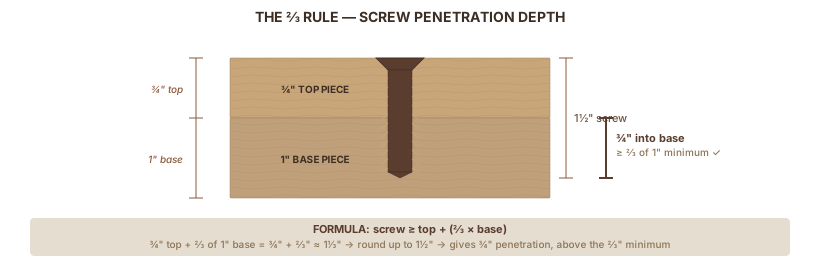
Example: Attaching a ¾" shelf cleat to a 1" pine wall ledger:
- Top piece: ¾"
- Two-thirds of base: ⅔ × 1" = ⅔"
- Minimum screw length: ¾" + ⅔" ≈ 1⅓" → round up to 1½"
- Result: ¾" penetration into the 1" ledger. Solid, no blowthrough risk.
How 1¼", 1½", and 2" compare
| Top Piece | Into Base | Best Length | Why |
|---|---|---|---|
| ¾" | ¾" | 1¼" | Meets ⅔ rule exactly; 1½" risks blowthrough |
| ¾" | 1" | 1½" | ¾" penetration — ideal |
| ¾" | 1.5"+ | 2" | Extra margin for heavy loads |
| ½" | ¾" | 1¼" | ½" penetration meets the rule |
| ½" | 1"+ | 1½" | ¾"+ penetration — solid |
The one exception you need to memorize
If you're fastening two ¾" boards together — like stacking a ¾" shelf on top of a ¾" cleat — don't use 1½". The math:
- Through ¾" top + ¾" penetration into base = 1½" total
- That puts the tip exactly at the far surface of the base
- With any inconsistency in the wood (knot, grain angle, overtightening), you get blowthrough
Use 1¼" for two ¾" boards. It gives ½" penetration, which meets the ⅔ rule comfortably.
When you're not sure between 1¼" and 1½", run the math. The table above covers the most common combinations.
Part 3: Where These Screws Work Best
Face frames and cabinet boxes
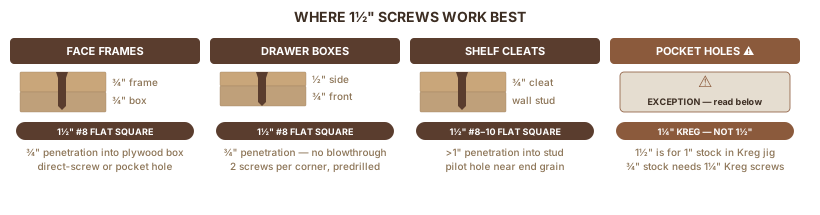
A face frame is the ¾" frame of rails and stiles that covers the front of a plywood cabinet box. Attaching ¾" frame pieces to a ¾" plywood box is the textbook 1½" application — it gives ¾" penetration into the box, well within tolerance.
You can drive these with pocket holes (see Pocket-Hole Joinery for the technique) or direct-screw them through the face. Either way, 1½" #8 is the screw.
For more on face frame construction, see Face Frame Cabinet Construction.
Drawer boxes
Typical drawer boxes use ½" plywood for the sides, with ¾" for the front and back. A 1½" screw through ½" side into ¾" back gives exactly ¾" penetration — more than the ⅔ minimum, with no blowthrough risk.
Drive two screws per corner, predrill in the plywood face, and you have a solid joint. See Drawer Construction for the full build sequence.
Shelf cleats and floating shelves
A ¾" cleat screwed to a wall stud (typically 1½" thick) is another ideal 1½" application. The screw travels through ¾" of cleat and 1¼" into the stud — well above the ⅔ threshold.
Use a pilot hole here, especially if you're hitting a hardwood stud or going in near the edge of a board. See Build a Simple Shelf.
The Kreg pocket-hole exception
Pocket-hole joinery uses special screws at 45° angles — the geometry is different from driving a screw straight in. For ¾" material in a Kreg jig, use 1¼" pocket-hole screws, not 1½".
Kreg Tool's pocket-screw selector:
| Material Thickness | Kreg Screw Length |
|---|---|
| ½" | 1" |
| ¾" | 1¼" |
| 1" | 1½" |
| 2× lumber | 2½" |
Kreg screws are also a different style: pan head with a washer, square drive, designed specifically for the pocket-hole angle. 1½" Kreg screws exist, but they're for 1"-thick stock, not the ¾" material most beginners use. See Pocket-Hole Joinery for the full system.
Part 4: Indoor vs. Outdoor Finish
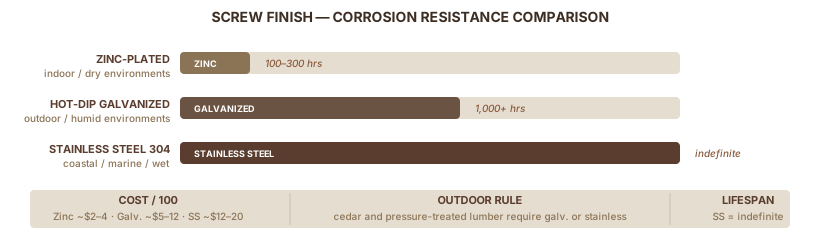
Screw finish is the coating that controls corrosion speed. Choose wrong and your outdoor project turns orange in two seasons.
Indoor projects (most of what beginners build): Standard zinc-plated screws. Fine for dry, climate-controlled spaces. Cost: about $2–5 per 100-count box.
Outdoor, high-humidity, or wet environments: The zinc coating on standard screws fails fast. Step up to:
- Hot-dip galvanized: Much thicker zinc coating — Fastener Systems puts it at 1,000+ hours of rust resistance versus 100–300 for standard zinc. Lasts 15–25 years in mild outdoor conditions. Good for decks, outdoor shelving, fences.
- Stainless steel (304/305): Rust-proof alloy — no coating to wear off. The right choice for coastal environments, marine exposure, or any project where corrosion failure isn't acceptable. More expensive, but indefinitely durable.
The cost difference between zinc and galvanized is roughly $3–8 per 100 screws. That's cheap insurance against replacing an entire outdoor project in year two.
Cedar and pressure-treated lumber also react badly with standard zinc screws — the chemicals in treated wood accelerate corrosion. Use galvanized or stainless with any exterior-grade lumber.
Part 5: Pilot Holes and Mistakes to Avoid
Do you need a pilot hole?
Always drill a pilot hole when:
- Working in hardwood — oak, maple, walnut, cherry, ash. Dense grain cracks under screw pressure without a pilot hole.
- Fastening within 2" of a board edge or 6" of the end — Maden.co's splitting guide explains that grain runs toward the edge and splits easily.
- Using #10 gauge screws in any wood type.
- Working with thin material under ½".
Can you skip it? In softwood (pine, cedar, fir), away from the edges, with #8 or smaller gauge — yes, technically. But a pilot hole costs ten seconds and prevents splits. Drill it.
What size pilot hole
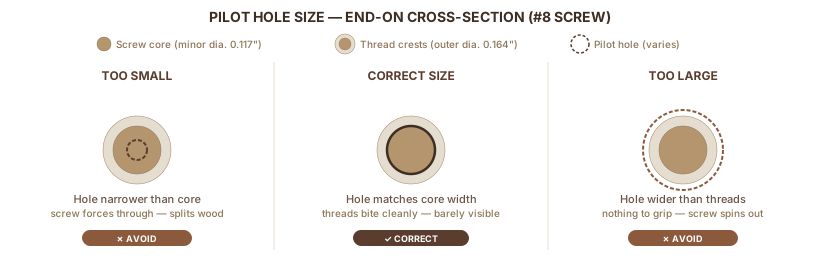
The pilot hole should match the screw's minor diameter — the solid core, not including the threads. A quick field test: hold the drill bit up against the screw shank. You should be able to clearly see the threads on both sides. If you can barely see threads, the bit is right. If you see a lot of thread, the bit is too small.
| Gauge | Softwood | Hardwood |
|---|---|---|
| #8 | 3/32" | 1/8" |
| #10 | 7/64" | 9/64" |
Sources: Bolt Depot pilot hole chart and McFeely's drilling reference.
Seven mistakes that split, strip, or rust your work
1. Using 1½" to join two ¾" boards. The screw tips at the far surface and risks blowthrough. Use 1¼".
2. Skipping pilot holes in hardwood. Oak and maple have dense fibers that crack under screw pressure. Splitting happens fast and looks bad. Always pilot in hardwood.
3. Wrong pilot hole size. Too small and the screw cams out before it's flush. Too large and the threads have nothing to grip. Use the field test — visible threads on both sides.
4. Using zinc-plated screws outdoors. Standard indoor screws rust within one or two seasons outdoors. Switch to galvanized or stainless for anything that sees moisture.
5. Overtightening. Stop when the screw head is flush with the surface. Driving past flush crushes wood fibers around the head, strips the threads, and weakens the joint. Set your drill's clutch to a medium setting and let it disengage.
6. Phillips cam-out. The bit slips under pressure, damages the screw drive, and often takes a chunk of the wood's surface with it. Buy square-drive screws — this problem disappears.
7. Not countersinking flat-head screws. The head needs to sit flush or slightly below the surface. If you drive it level with the surface but don't countersink, the tapered edge catches on sandpaper and looks rough. Use a countersink bit to create a small recess, then fill with wood filler if needed.
Quick Reference
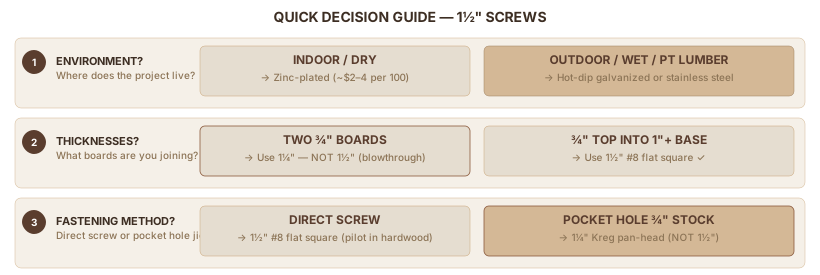
Bookmark this before the hardware store run. The three decisions below cover almost every situation a beginner runs into with 1½" screws. Environment dictates finish — zinc indoors, galvanized or stainless outdoors. Stock thickness sets length — two ¾" boards is the trap that sends people back to the store. Method picks the screw type — direct driving uses standard flat-head wood screws, but pocket-hole jigs require Kreg-specific pan-head screws.
| Situation | Screw | Pilot Hole? | Finish |
|---|---|---|---|
| Face frame on ¾" cabinet box (direct) | 1¼" #8 flat square | Yes (hardwood), optional (soft) | Zinc |
| Drawer box (½" sides, ¾" front) | 1½" #8 flat square | Yes | Zinc |
| Shelf cleat into wall stud | 1½" #8–#10 flat square | Yes | Zinc/Galv. |
| Outdoor cedar shelf | 1½" #8 flat square | Yes | Galvanized |
| Workbench apron (heavy) | 1½" #10 flat square | Yes | Zinc |
| Two ¾" boards stacked | 1¼" #8 flat square | Yes (near edge) | Zinc |
| Kreg pocket hole, ¾" material | 1¼" Kreg pan-head | No (jig does it) | Zinc |
Part 6: What to Learn Next
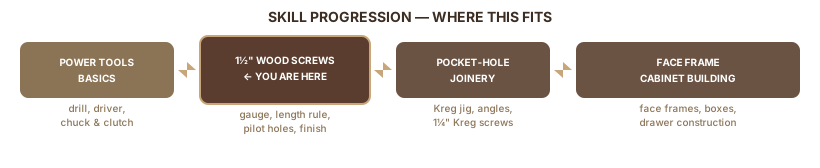
Once you can pick the right 1½" screw without thinking about it, the next jump is joinery that hides the screw entirely. Pocket-hole jigs from Kreg drive 1¼" pan-head screws at a 15° angle so the head sits inside a pre-drilled pocket — no countersink, no exposed fastener on the show face. Face-frame cabinet construction is the natural first project after that, because face frames are mostly pocket holes plus glue.
Know before you use screws:
- Choosing Your First Power Tools — includes the drill you'll drive these with
Where you'll use these screws most:
- Pocket-Hole Joinery — the fastest way to build face frames and drawer boxes
- Face Frame Cabinet Construction — first cabinet project
Fastening knowledge that rounds this out:
- Glue and Adhesives — when screws alone aren't enough
- Drawer Construction — the next joinery challenge after shelves
FAQ
Can I use 1½" screws to join two ¾" boards?
No, and this is the most common 1½" screw mistake. Two ¾" boards stacked equal 1½" of material — exactly the length of the screw. The tip will exit the back of the bottom board, leaving a sharp point on the show face and risking blowthrough. Use 1¼" #8 flat-head screws instead. They penetrate the base by ⅔ thickness without breaking through.
Do I need to pre-drill pilot holes for 1½" wood screws?
It depends on the wood. In softwood like pine, cedar, or fir, modern self-tapping screws drive cleanly without a pilot hole. In hardwood like oak, maple, or walnut, you must pre-drill — a 9/64" bit for #8 screws and 11/64" for #10. Always pilot-drill within 2 inches of an end grain or board edge regardless of species, because end grain splits along the fiber direction with very little force.
Are 1½" Kreg pocket-hole screws the same as standard 1½" wood screws?
No. Kreg pocket-hole screws have a wider washer-style pan head designed to seat at the bottom of the pocket, plus a self-tapping auger tip. Standard wood screws have a flat countersink head that won't seat correctly in a pocket. Also, for ¾" stock you should use 1¼" Kreg screws — not 1½" — to avoid blowthrough on the mating piece. The 1½" Kreg is for 1" or thicker stock.
What's the difference between zinc, galvanized, and stainless 1½" screws?
Zinc-plated screws ($2–4 per 100) are fine for indoor, dry projects but rust within months in damp conditions. Hot-dip galvanized screws ($5–8 per 100) survive outdoor use and contact with pressure-treated lumber. Stainless steel ($12–20 per 100) is the only safe choice for cedar, redwood, or coastal projects — galvanized coating reacts with cedar tannins and stains the wood black around every screw head.
How many 1½" screws come in a 1-pound box?
Roughly 200–220 #8 × 1½" wood screws fit in a 1-pound box. McFeely's and similar fastener vendors publish exact counts on each product page. For most beginner projects — a small bookcase, a workbench top, a couple of cabinets — a single 1-pound box is enough material to last six months.
Sources
- AFT Fasteners — Wood Screw Dimensions and Mechanical Specs — gauge diameters and cross-sectional area comparisons
- Leola Fasteners — Drive Type Comparison — cam-out analysis across Phillips, square, and Torx
- McFeely's — Screw Size Comparisons — gauge applications and screw length selection
- Kreg Tool — How to Select the Right Pocket-Hole Screw — official length chart by material thickness
- Fastener Systems — Screws That Don't Rust — corrosion resistance data for zinc, galvanized, and stainless finishes
- Maden.co — How to Prevent Wood Splitting When Screwing — pilot hole guidance and edge/end grain splitting
- Bolt Depot — Pilot Hole Sizes for Wood Screws — pilot hole diameter chart by gauge and wood type
- McFeely's — Drilling Chart — drill bit sizing reference for all screw gauges
Tools Used
How We Research
We don't take affiliate revenue or accept review units. Picks come from multi-source research — manufacturer specs, OSHA / EPA / ASTM regs, and long-form practitioner threads — plus Ahmed's hands-on use where relevant. When we recommend something, we explain why.
Up Next
1¼" Wood Screws
WOOD & MATERIALS · Beginner