
How to Use This Guide
CDX, ACX, RTD, BCX, MDO, marine grade: the acronyms stack up fast, and the people at the lumber yard desk don't always explain what they mean.
This guide cuts through the alphabet soup. It covers what actually makes plywood "exterior grade," what each letter designation means, and which grade to buy for any outdoor project.
If you're at the lumber yard now: Jump to the grade comparison table or the decision tree.
Exterior Plywood at a Glance
Exterior plywood is plywood made with waterproof phenolic resin adhesive. The grade letters (CDX, ACX, etc.) tell you veneer quality; the bond classification (Exposure 1 or Exterior) tells you how long it can survive moisture. For most structural work, CDX or RTD is the right choice. For anything painted and visible outside, go ACX.
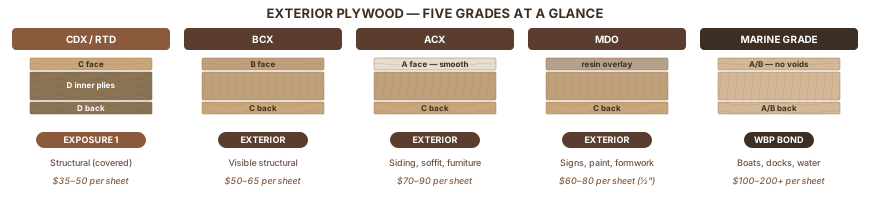
| What makes it "exterior" | Phenolic resin adhesive — not the wood species |
| Most common grades | CDX/RTD (structural), ACX (finished surfaces) |
| Standard size | 4×8 feet; thicknesses from 3/8" to 3/4" |
| Price range | ~$35 (CDX) to $200+ (marine grade) per 4×8 sheet |
| Grade stamp key | Look for "EXTERIOR" or "EXPOSURE 1" designation |
In this guide:
- Grade comparison table — CDX, ACX, BCX, MDO, marine
- How to choose the right grade for your project
- When pressure-treated is required
- Sizes and thickness by application
Part 1: What Exterior Plywood Actually Is
Plywood is layers of wood veneer glued together with alternating grain directions. That cross-grain construction gives it dimensional stability: it resists warping and cupping across its full width in a way solid boards can't. But not all plywood handles moisture the same way.
The Glue Is What Matters
Walk into any lumber yard and you'll see stacks of plywood marked "exterior grade." The wood itself doesn't account for much of the difference between interior and exterior panels. The adhesive does.
- Interior plywood uses urea-formaldehyde resin. It bonds well in dry, stable conditions. Expose it to sustained moisture and the glue breaks down. The veneers separate. The panel fails.
- Exterior plywood uses phenolic resin (phenol-formaldehyde). This adhesive is genuinely waterproof. It doesn't break down when wet, doesn't degrade through wet-dry cycling, and holds up to long-term weather exposure. The [USDA Forest Products Lab Wood Handbook](https://www.fpl.fs.usda.gov/documnts/fplgtr/fpl_gtr190.pdf) covers phenolic-resin adhesive performance under wet-dry cycling in detail.
So when a panel is called "exterior grade," it means: this adhesive won't fail in moisture.
Exposure 1 vs. Exterior: The Distinction That Matters
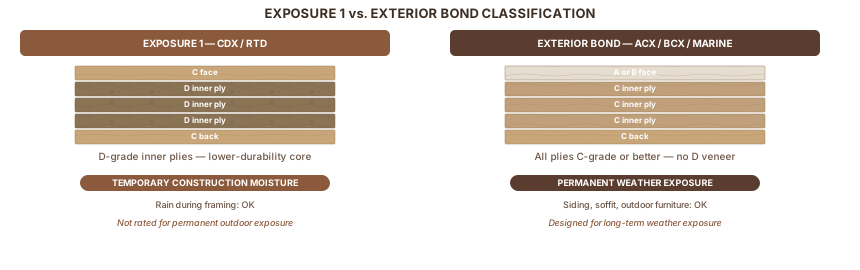
APA (The Engineered Wood Association) rates plywood in two bond classifications. WJE Engineering's bond classification primer explains the difference clearly, and it matters more than most buying guides admit:
Exposure 1 (what CDX and RTD are):
- Uses phenolic resin, the same waterproof adhesive as "Exterior" panels
- But inner plies can be D-grade veneer: rougher, with larger knots and gaps
- Rated for temporary construction moisture — rain during framing, short delays before the structure gets closed in
- NOT rated for permanent outdoor exposure
Exterior (what ACX, BCX, and marine grade are):
- Uses phenolic resin
- All plies must be C-grade or better. No D veneer anywhere, including inner layers
- Designed for permanent outdoor exposure to weather
CDX left permanently exposed as siding, or as a shed roof without roofing material, will eventually fail. The D-grade inner veneers don't meet the same durability standard as Exterior-rated panels. CDX isn't a bad product. It's the right product for structural applications that get covered, not for visible, permanently exposed surfaces.
Part 2: Exterior Plywood Grades Explained
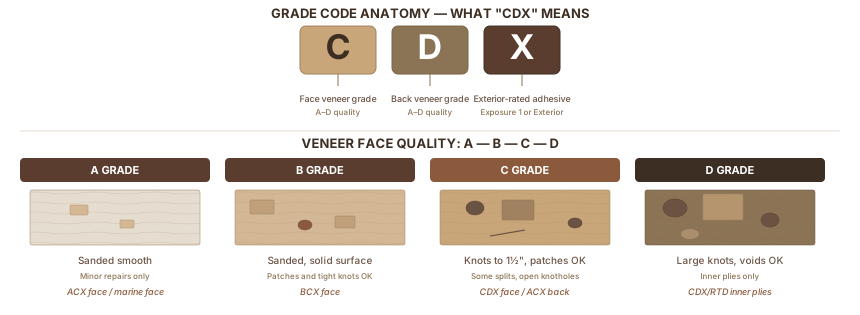
Every grade designation follows the same pattern: two letters plus an X.
- First letter = face veneer quality (the "good" side)
- Second letter = back veneer quality (the hidden side)
- X = exterior-rated adhesive (Exposure 1 or Exterior bond)
Veneer Grade Scale
| Grade | Surface | Defects Allowed |
|---|---|---|
| A | Sanded smooth | Minor repairs only; nearly knot-free |
| B | Sanded, solid | Small patches; tight knots allowed |
| C | Not fully sanded | Knots to 1.5", knotholes to 1"; some splits |
| D | Rough | Larger knots and voids; inner plies only |
Exterior Plywood Grade Comparison
| Grade | Face | Back | Bond | Best For | Approx. Cost (3/4" sheet) |
|---|---|---|---|---|---|
| CDX / RTD | C | D | Exposure 1 | Roof/wall sheathing, subfloor | $35–50 |
| BCX | B | C | Exterior | Visible structural, shed walls | $50–65 |
| ACX | A | C | Exterior | Siding, soffit, outdoor furniture | $70–90 |
| MDO | Overlay | C | Exterior | Signs, concrete forms, premium paint | $60–80 (1/2") |
| Marine | A or B | A or B | Exterior (WBP) | Boats, docks, permanent water exposure | $100–200+ |
CDX and RTD: The Structural Workhorse
CDX is the most common plywood on any construction site. C-face, D-back, Exposure 1 bond. It's affordable, available everywhere, and suited for structural applications that will be covered by roofing, siding, or flooring.
RTD (Resistance Temperature Detector) has largely replaced CDX at big-box stores. Bertas Store's RTD guide explains the name: sensors track heat across each layer during manufacturing to ensure the phenolic adhesive cures evenly. More consistent glue bonds than old CDX stock. RTD is also rated Exposure 1 and performs the same role as CDX; the labels are interchangeable for most projects.
Both grades have visible knots, rough patches, and occasional small voids. That's expected. They're structural products, not finished surfaces.
BCX: The Upgrade for Visible Structural Work
BCX carries a true Exterior bond rating (all inner plies C or better) and a B-grade face: sanded, solid, with minor patches and tight knots. It costs more than CDX but less than ACX. Use it when the surface will be partially visible, or when you want a true Exterior-rated panel for a structural application that's exposed longer than expected.
ACX: The Right Choice for Finished Exterior Surfaces
ACX has an A-grade face: sanded smooth, nearly knot-free, ready to paint. The C-back handles structural loads; the A-face is what you see. It carries a true Exterior bond rating.
If you're building exterior siding, a painted soffit, or outdoor furniture with a finished look, ACX is the grade. The smooth face holds paint cleanly and takes stain evenly. At roughly double the CDX price, it's worth it when the plywood is visible.
MDO: The Painter's Panel
MDO (Medium Density Overlay) starts with exterior-rated plywood and bonds a thermosetting resin-saturated fiber overlay to one or both faces under heat and pressure. That overlay contains at least 27% phenolic resin, producing an ultra-smooth, dimensionally stable paint surface.
Performance Panels reports that paint finishes on MDO last up to three times longer than the same finish on ordinary plywood. Exterior signs, concrete formwork, and painted siding that needs maximum durability are MDO's territory.
Marine Grade: When Voids Are the Enemy
Standard exterior plywood, even ACX, can have voids in the inner plies. These are air pockets, gaps between veneer layers. Structurally they're often acceptable. In permanently wet environments, moisture finds those voids and creates pockets of trapped humidity. Rot starts inside the panel where you can't see it.
Marine grade eliminates this entirely. All plies must be A or B grade. No D veneer, no voids anywhere in the panel. The adhesive is WBP (weather and boil proof), a stronger standard than standard phenolic. As McIlvain Lumber explains, marine grade is typically Douglas fir or Okoume, meeting BS 1088: the international marine standard.
For boat building, docks, and any project where the plywood will be near standing water long-term, marine grade is the right call. For most outdoor furniture or siding, ACX is sufficient. For the full breakdown of marine-grade selection, species, standards, and when ACX genuinely substitutes, see Marine-Grade Plywood.
Part 3: Pressure-Treated Exterior Plywood
Standard exterior plywood, even marine grade, will eventually decay when buried in soil or sitting in persistent moisture. Pressure-treated (PT) plywood exists for those conditions.
What Treatment Does
Under high pressure, a liquid preservative solution penetrates the wood fibers. Those chemicals block the biological processes that cause rot and attract insects. This is not weather resistance: it's decay and insect resistance for conditions where the wood stays wet or contacts soil.
Modern PT plywood uses copper-based preservatives. The EPA phased out CCA (Chromated Copper Arsenate) for residential use in 2003 and registered two replacements. What you'll find at lumber yards now:
- ACQ (Alkaline Copper Quaternary): above-ground and ground-contact applications
- CA-B (Copper Azole Type B): currently most common; registered for ground contact and salt water splash
Both are copper-based. Per AWPA treatment standards, the arsenic from old CCA treatments is gone from modern residential PT wood. For a complete guide to identifying pressure-treated lumber and reading end tags, see How to Tell If Wood Is Pressure Treated. For the framing lumber that goes alongside PT plywood sheathing, see 2x8 Treated Lumber for span tables and structural requirements.
Critical: Use the Right Fasteners
Copper-based preservatives corrode standard zinc-coated fasteners. Use only hot-dip galvanized or stainless steel hardware with modern PT plywood. This applies to nails, screws, joist hangers, and any metal hardware in contact with the treated wood.
When PT Plywood Is Required
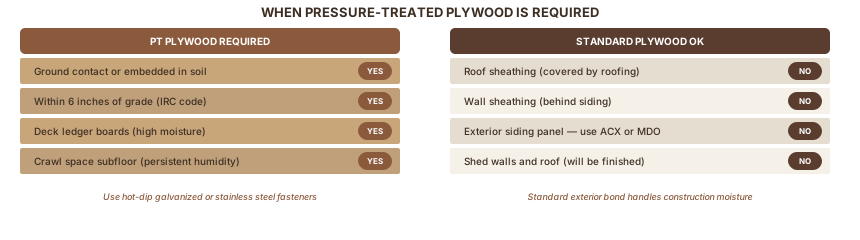
| Application | PT Required? | Notes |
|---|---|---|
| Ground contact or embedded in soil | Yes | No standard plywood survives this |
| Within 6" of grade (ground level) | Yes | IRC requirement |
| Deck ledger boards | Yes | High moisture, structural connection |
| Crawl space subfloor | Yes | Persistent humidity |
| Roof sheathing (covered by roofing) | No | CDX/RTD handles construction moisture |
| Wall sheathing (behind siding) | No | Covered; standard sheathing is fine |
| Exterior siding panel | No | Use ACX or MDO |
| Elevated exterior decking (off ground) | Varies | Check local code; some areas require it |
Part 4: Sizes, Thicknesses, and Span Ratings
Standard Sheet Size
Exterior plywood comes in 4×8-foot sheets (48"×96"). Specialty suppliers carry 4×9 and 5×10 for applications requiring larger panels. For most projects, 4×8 is what you'll find and what you'll need.
Nominal vs. Actual Thickness
Plywood is sold by nominal thickness but measured actual is slightly thinner:
When ordering from a spec, use the actual dimension. When buying at a lumber yard, the nominal label is how panels are marked.
Thickness by Application
| Application | Recommended Thickness | Typical Grade |
|---|---|---|
| Roof sheathing, 16" OC rafters | 15/32" (1/2") | CDX / RTD |
| Roof sheathing, 24" OC rafters | 19/32" (5/8") | CDX / RTD |
| Wall sheathing, 16" OC studs | 3/8" minimum; 15/32" common | CDX / RTD |
| Exterior siding panel | 3/8"–5/8" | ACX, MDO |
| Subfloor (residential) | 19/32"–23/32" | CDX / RTD T&G |
| Shed/outbuilding structure | 23/32" (3/4") | CDX / RTD |
| Outdoor furniture, visible panels | 23/32" (3/4") | ACX |
APA Span Ratings
Structural sheathing panels carry a span rating printed on the grade stamp: two numbers separated by a slash, like "32/16":
- Left number (32): maximum rafter spacing in inches for roof applications
- Right number (16): maximum joist spacing in inches for floor applications
A panel rated 32/16 works on rafters up to 32" on center, or floor joists up to 16" on center. Most residential roofs use 24" OC rafters, which requires a span rating of at least 24 on the left.
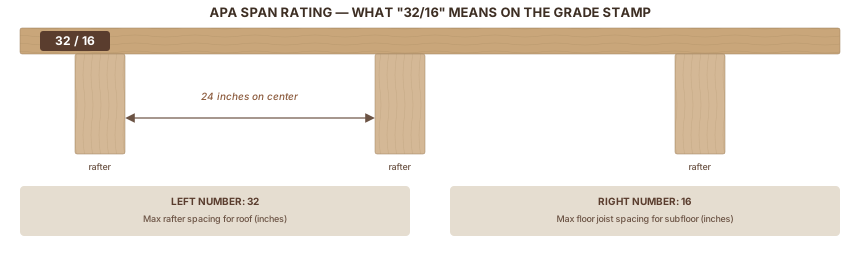
Today's Homeowner recommends 19/32" (5/8") plywood for 24" OC rafters: the most common rafter spacing in residential construction.
Part 5: Best Uses for Each Grade
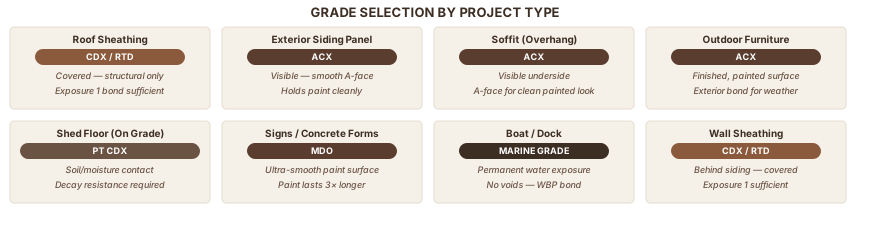
CDX and RTD: Covered Structural Work
Use CDX or RTD for any structural application that will be covered by another material:
- Roof sheathing under shingles or metal roofing
- Wall sheathing behind siding
- Subfloor under hardwood, tile, or LVP
- Shed walls and roof that will be finished or painted
- Garage walls covered by drywall
The D-grade inner plies don't matter when the panel is buried inside a structure. Using ACX for roof sheathing is expensive overkill. CDX is purpose-built for this job.
One caveat: don't leave CDX or RTD permanently exposed without coating. It will weather, check, and eventually fail. If framing sits exposed over a winter, cover the sheathing with housewrap or tar paper before moving on.
BCX: One Notch Up
BCX makes sense when the surface will be partially visible, or when you want true Exterior-rated plywood for a structural application. Painted shed interiors, visible wall sections in outbuildings, and exterior wall panels uncovered for extended periods are good BCX territory.
ACX: Finished Exterior Surfaces
ACX is the right grade whenever the plywood will be permanently visible and needs to look good:
- Exterior siding panels: The A-face takes paint cleanly and evenly
- Soffit: The underside of roof overhangs is visible; CDX would look rough
- Outdoor cabinet and furniture panels: Paintable, finished surface
- Fascia boards (when plywood is used instead of solid fascia)
MDO: Exceptional Paint Durability
MDO is the right choice when paint longevity is the priority: signs that need to last years in the sun and rain, concrete formwork panels reused multiple times, or exterior siding on a premium project.
Marine Grade: Permanent Water Exposure
Marine grade earns its price premium in one scenario: the plywood will be near standing water long-term, and a hidden rot pocket could cause structural or safety failure.
- Boat transoms and deck panels
- Dock frames and surface boards
- Hot tub or pond surrounds
- High-end outdoor furniture in very wet climates
For everything else: a painted porch table, a backyard planter box, a potting bench — ACX with a good exterior paint or sealant is sufficient.
Pressure-Treated: Ground Contact and Persistent Moisture
Use PT plywood anywhere the wood contacts soil, sits in persistent moisture, or is within 6" of the ground. Deck ledger boards, shed floor slabs on grade, and crawl space subfloors all belong in this category.
Part 6: How to Choose the Right Grade
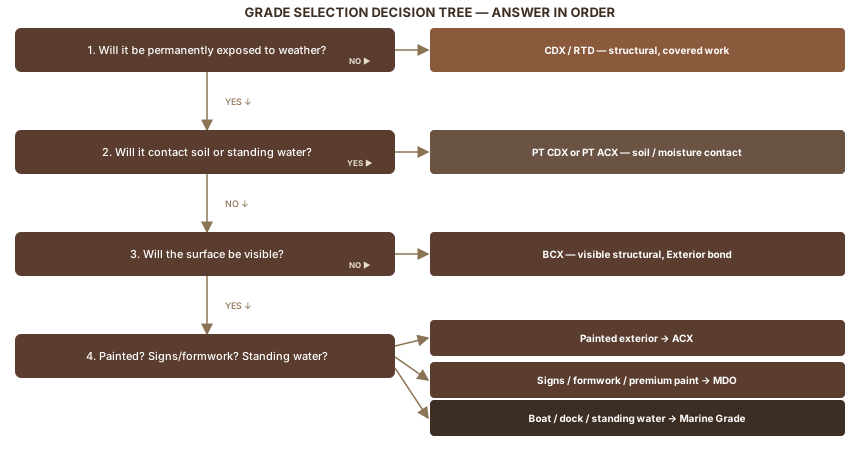
Answer these four questions in order and you'll land on the right grade.
1. Will the plywood be permanently exposed to weather?
No — covered by roofing, siding, or flooring. Buy CDX or RTD. Cheapest option, right one for structural work that gets covered.
Yes — it stays exposed. Go to question 2.
2. Will it contact soil or sit in standing water?
Yes — ground contact, within 6" of grade, or in a crawl space. Buy pressure-treated CDX or ACX, depending on whether appearance matters.
No. Go to question 3.
3. Will the surface be visible?
No — structural, just exposed. Buy BCX. True Exterior bond without paying for the A-face.
Yes — people will see it. Go to question 4.
4. What are the finish and exposure conditions?
- Painted and outdoors (siding, soffit, furniture) → ACX
- Signs, premium painted surface, concrete formwork → MDO
- Near standing water long-term (boat, dock) → Marine grade
Quick Reference by Project
| Project | Right Grade | Reasoning |
|---|---|---|
| Shed roof | CDX / RTD | Covered by roofing; structural only |
| Shed walls (to be painted) | CDX / RTD | Covered; paint handles the rest |
| Exterior siding panel | ACX | Smooth A-face holds paint |
| Soffit (roof overhang underside) | ACX | Visible; needs clean surface |
| Exterior signs | MDO | Best paint adhesion available |
| Below-grade shed floor | PT CDX | Rot resistance required |
| Boat transom | Marine grade | No voids; waterproof |
| Outdoor furniture | ACX | Paintable; durable enough |
Part 7: Buying Exterior Plywood
Reading the APA Grade Stamp
Every APA-certified panel carries a grade stamp on the back face or edge. You don't need to memorize all of it. Check these three things:
- Bond classification: The stamp says either "EXPOSURE 1" or "EXTERIOR." Exterior = permanent weather. Exposure 1 = construction moisture only. This is the most important mark on the panel.
- Grade designation: For sheathing, you'll see "RATED SHEATHING" with span rating. For appearance grades, you'll see the letter combination (ACX, BCX, etc.).
- Thickness: Confirms you got what you asked for.
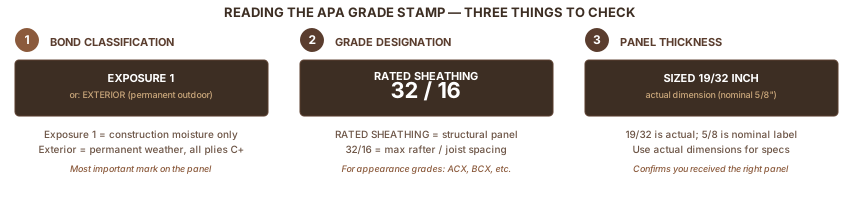
The APA publishes a guide to reading grade stamps: worth a look before your first purchase.
What to Inspect at the Yard
Edges: Look at the panel edge and count the plies. On CDX, small voids in inner plies are expected. On ACX, the inner layers should be tighter. Reject any panel with visible edge delamination: layers separating at the edge.
Face: On ACX or MDO, the face should be smooth and sanded. Patches on an A-grade face are acceptable; visible voids or open knots are not.
Warp: Hold the panel on edge and sight down its length. Some bow is normal and often relaxes when stored flat. Severe twist or cup is a defect.
Moisture: Swollen edges or a soft feeling at the edge mean water intrusion. Pass on these panels: delamination may have already started inside.
Where to Buy
Big-box stores (Home Depot, Lowe's, Menards): Reliable for CDX and RTD in multiple thicknesses. ACX availability varies by location — call ahead. Marine grade and MDO are rarely in stock; special order only.
Local lumber yards: Better grade selection, more consistent quality control, and staff who know the material. Worth the trip for ACX, BCX, or anything beyond standard sheathing.
Specialty plywood suppliers (Anderson Plywood, Forest Plywood, Capitol City Lumber, Total Wood Store): Best source for marine grade, MDO, and specialty sizes (4×9, 5×10). These suppliers can match panels for grade consistency.
Cost Ranges (2025–2026 Approximate)
| Grade | 4×8 Sheet (3/4") | Notes |
|---|---|---|
| CDX / RTD | $35–50 | Volatile; moves with lumber commodity market |
| BCX | $50–65 | Less common at big-box stores |
| ACX | $70–90 | More stable pricing; call ahead on availability |
| MDO (1/2") | $60–80 | Best pricing at sign supply or specialty dealers |
| Marine grade | $100–200+ | Okoume is more affordable; Douglas fir is mid-range |
Lumber prices fluctuate with commodity markets. ThePlywood.com's 2025 price tracker tracks current regional ranges. Get local quotes before budgeting any project.
Storage Before Installation
Store plywood flat on a level surface, never on edge. Keep it off the ground on pallets or scrap wood stickers. Even Exterior-rated plywood should stay dry before installation: prolonged pre-installation moisture causes edge swelling and face checking. Acclimate panels for 48–72 hours if they're going into a climate-controlled space.
Sources
This guide draws on technical publications from APA (The Engineered Wood Association), EPA guidance on wood preservative chemicals, AWPA treatment standards, and educational resources from specialty plywood dealers.
- WJE Engineering Primer: Exterior or Exposure 1 Plywood — definitive technical explanation of bond classification
- Bertas Store: Understanding RTD Plywood — RTD manufacturing process and comparison to CDX
- Performance Panels: Signage — MDO overlay specifications and paint longevity data
- McIlvain Lumber: Marine Grade Explained — marine vs. exterior comparison, void failure mechanism
- EPA: Overview of Wood Preservative Chemicals — CCA phaseout history, current PT chemicals
- AWPA: Information for Homeowners — treatment standards and copper-based preservative guidance
- Today's Homeowner: Roof Sheathing Thickness Guide — thickness recommendations by rafter spacing
- APA Trademarks and Grade Stamp Anatomy — official guide to reading APA grade stamps
- ThePlywood.com: Plywood Prices — 2025 pricing data by grade
Also Referenced
Tagged
Up Next
Choosing the Right Plywood Sheet
WOOD & MATERIALS · Beginner