
Marine-Grade Plywood at a Glance
Marine plywood is exterior plywood built to tighter tolerances: void-free core, clean face veneers, and WBP (Weather and Boil Proof) adhesive. It's not waterproof wood. The glue bond won't delaminate in water, but the wood still absorbs moisture. You have to seal it. For most outdoor furniture, ACX plywood is the smarter buy at half the price. Marine plywood earns its premium on boats, docks, and projects where both faces are visible and structural integrity in wet conditions matters.
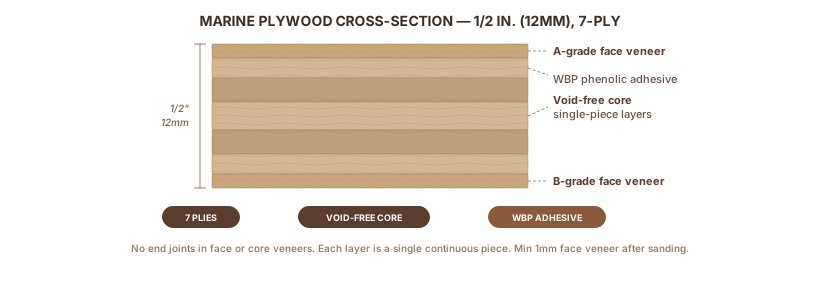
| Core construction | Void-free; single-piece layers; end joints prohibited |
| Adhesive | WBP phenol-formaldehyde (same glue as ACX exterior plywood) |
| Main standards | BS 1088 (imported tropical); APA PS1-09 (domestic Douglas fir) |
| Common species | Okoume, Sapele, Meranti (imported); Douglas Fir (domestic) |
| Thicknesses | 1/4" to 3/4" standard; 1" available from specialty suppliers |
| Price (3/4" sheet) | $75–$105 domestic fir; $120–$200 BS 1088 okoume |
In this guide:
- What makes it "marine grade" — and what it doesn't mean
- The standards: BS 1088, APA PS1-09, Lloyd's Register
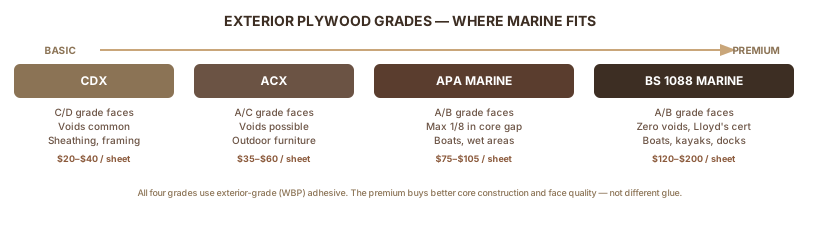
- Marine vs. ACX vs. CDX — side-by-side comparison
- Thicknesses and ply counts
- When marine plywood is actually worth the price
Part 1: What Makes It "Marine Grade"
Three things separate marine plywood from standard exterior plywood.
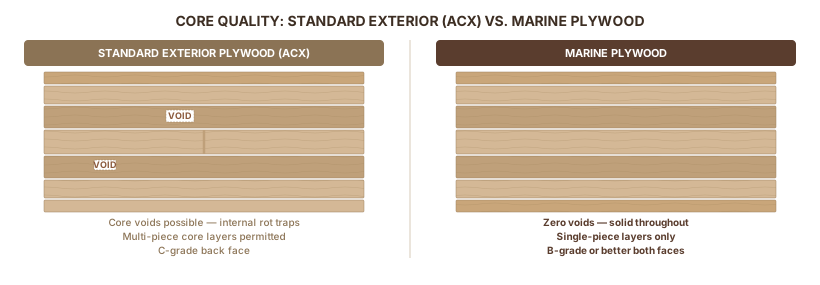
1. Void-free core. In standard plywood, the inner layers can have gaps, holes, and multi-piece core veneers. Marine plywood doesn't allow any of this. Each core layer is a single, continuous piece of veneer. End joints in the core are prohibited. Voids matter because water trapped in a void creates an interior rot pocket. You can't see it, and you can't seal it from the outside.
2. WBP adhesive. WBP stands for Weather and Boil Proof. The glue, phenol-formaldehyde resin, withstands prolonged boiling water, steam, and cold water without delaminating. It also resists micro-organisms. Standard interior plywood uses urea-formaldehyde glue that fails when wet. Marine plywood's layers stay bonded because of this adhesive, not because the wood itself is waterproof.
3. Clean face veneers. Marine plywood faces are A or B grade. Only "sound pin knots" are permitted: no patches, no seams, no open defects. ACX gives you one clean face and a C-grade back. Marine gives you two clean faces.
What "Marine Grade" Does Not Mean
The wood is not waterproof. The glue bond is waterproof, but wood fibers still absorb moisture. Unsealed marine plywood set outdoors will swell at the edges, develop mold, and eventually rot. The layers won't separate, but the wood will fail.
Seal all surfaces and, critically, all edges. Edges are where water wicks into plywood fastest, moving along the grain into the core. Most premature failures start at unprotected cut edges.
Part 2: The Two Standards: BS 1088 and APA
BS 1088 — The World Standard for Imported Marine Plywood
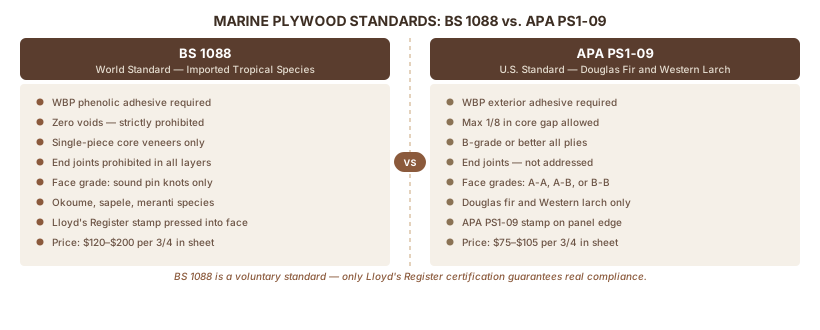
BS 1088 is a British Standard used globally. It applies to marine plywood made from tropical hardwood species: okoume, sapele, meranti, and similar. Christine deMerchant's marine plywood grades reference outlines the key requirements:
- WBP adhesive (tested to survive boiling water)
- Void-free core; single-piece core layers
- Sound pin knots only in faces (max 6 per square foot; average 2 per square foot across the full panel)
- Minimum 1mm face veneer thickness after sanding
- End joints prohibited in both face and core veneers
The problem: BS 1088 is a voluntary standard. According to the WoodenBoat School's marine plywood consumer guide, "there are no BS 1088 police." Any manufacturer can stamp "BS 1088" on their product. The market has significant fraud — cheap plywood with voids and interior-grade glue stamped with a standard it doesn't meet.
Lloyd's Register Type Approval is the solution. Lloyd's Register is an independent certification body that validates BS 1088 compliance through factory inspections and sample testing. Manufacturers pay to participate. Certified panels carry a stamp pressed directly into the face at regular intervals — not a printed label that anyone can apply. The stamp shows the Lloyd's Register approval mark, the manufacturer identification, and the BS 1088 reference.
For imported tropical marine plywood, Lloyd's Register certification is the only reliable quality check.
APA PS1-09 — Domestic Douglas Fir Marine Plywood
APA PS1-09 is the American Plywood Association's specification for domestic marine plywood. It applies to Douglas fir and Western larch — for the underlying wood-fiber and adhesive chemistry, the [USDA Forest Products Lab Wood Handbook](https://www.fpl.fs.usda.gov/documnts/fplgtr/fpl_gtr190.pdf) is the canonical reference. The APA PS1-09 specification requires:
- All plies must be B-grade or better
- Maximum core gap: 1/8 inch
- Exterior (waterproof) adhesive required
- Available face/back grades: A-A, A-B, B-B
This is the marine plywood sold at Home Depot and Lowe's. Home Depot's A-B marine fir runs $90–$105 for a 3/4" sheet. It's less strict than BS 1088 on some veneer quality criteria, but it's independently certified, consistently available, and suitable for most non-boat applications.
How to Identify Genuine Marine Plywood When Buying
- Look for the Lloyd's stamp pressed into the face — genuine BS 1088 panels have it; counterfeit panels have a printed label or nothing
- Inspect the edge — thin, uniform plies with no visible gaps
- Count the plies — more plies for a given thickness indicates better manufacturing
- Price check — genuine Lloyd's-certified okoume runs $120–$200 for a 3/4" sheet; if someone's selling "BS 1088 marine plywood" at CDX prices, it isn't
Part 3: Species
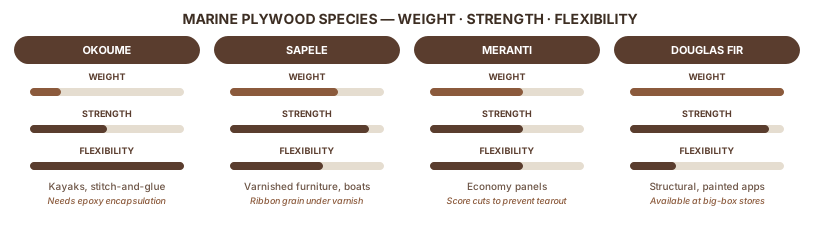
| Species | Weight | Strength | Flexibility | Best For | Note |
|---|---|---|---|---|---|
| Okoume | Light | Moderate | Excellent | Stitch-and-glue boats, kayaks | Needs epoxy coating; least rot-resistant |
| Sapele | Medium | High | Moderate | Varnished furniture, structural boats | Beautiful ribbon-grain under varnish |
| Meranti | Medium | Medium | Moderate | Economy option | Tearout-prone when cutting |
| Douglas Fir | Heavy | High | Low | Structural, painted applications | Face checks if bent; available at big-box |
Okoume is the lightest and most flexible marine plywood. [WEST System's marine plywood guide](https://www.epoxyworks.com/marine-grade-plywood-basics/) calls it the preferred species for stitch-and-glue construction because it bends around frames without cracking. Okoume isn't naturally rot-resistant, so epoxy encapsulation or a strong exterior finish is required.
Sapele is denser and stronger. Its ribbon-figure grain looks exceptional under varnish, making it the first choice when the wood will be visible and varnished. It holds up in wide unsupported spans better than okoume.
Meranti is the economical option. Expect tearout when cutting; use a higher tooth-count blade and score the cut line first.
Douglas Fir is what you get at Home Depot. Heavy and structurally strong, domestically sourced. The face veneer checks (splits along the grain) when bent perpendicular to the grain. Boat builders sheathe fir marine plywood with fiberglass to prevent this.
Part 4: Marine vs. ACX vs. CDX
The full comparison:
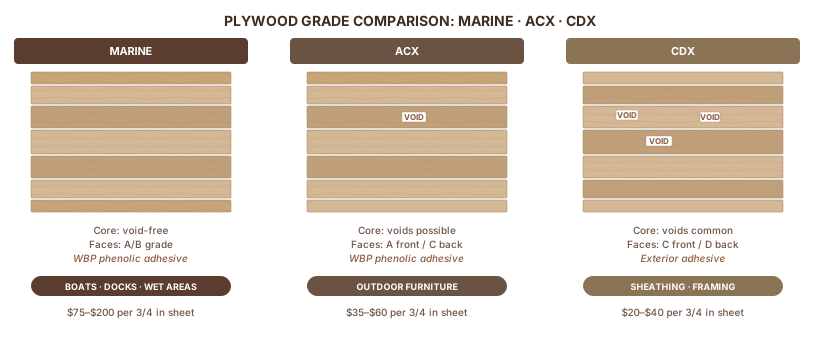
| Feature | Marine | ACX | CDX |
|---|---|---|---|
| Face grade | A or B | A front, C back | C front, D back |
| Core voids | None | Possible | Common |
| Core construction | Single-piece layers | Multi-piece OK | Multi-piece OK |
| End joints | Prohibited | Allowed | Allowed |
| Adhesive | WBP phenolic | WBP phenolic | Exterior (same family) |
| Both faces clean | Yes | One face | No |
| Price (3/4", approx.) | $75–$150+ | $35–$60 | $20–$40 |
| Best use | Boats, docks, wet areas, both faces visible | Outdoor furniture (one visible face) | Sheathing, covered exterior |
The most important line in that table: marine and ACX use the same WBP adhesive. Curtis Lumber's comparison guide confirms both use waterproof permanent phenolic glue. The marine premium pays for the void-free core and the clean back face — not a different glue.
Building an outdoor bench where the seat is seen and the underside faces the ground? ACX delivers a clean A-grade surface at half the price. The underside doesn't need to be B-grade.
Building a kayak hull where both faces are visible and a void in the core creates a stress fracture risk? Marine.
Part 5: Thicknesses and Specifications
Marine plywood comes in standard 4 ft × 8 ft sheets in these thicknesses. Some specialty dealers stock 5 ft × 12 ft sheets for larger boat panels.
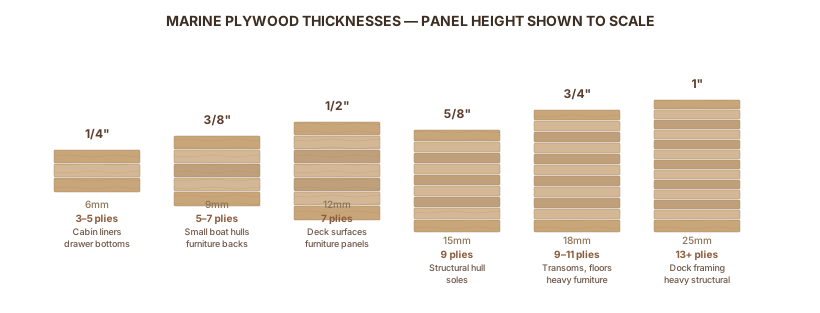
| Thickness | Metric | Typical Ply Count | Common Uses |
|---|---|---|---|
| 1/4" | 6mm | 3–5 | Cabin liners, drawer bottoms, light panels |
| 3/8" | 9mm | 5–7 | Hull planking (small boats), furniture backs |
| 1/2" | 12mm | 7 | Deck surfaces, furniture panels |
| 5/8" | 15mm | 9 | Structural hull panels, soles |
| 3/4" | 18mm | 9–11 | Transoms, cockpit floors, heavy furniture |
| 1" | 25mm | 13+ | Heavy structural, dock framing |
More plies for a given thickness means better dimensional stability and more consistent thickness across the sheet. BS 1088 okoume panels typically have more plies than domestic APA fir panels at the same thickness.
The 3/4" sheet is the most commonly stocked size at big-box stores and the most versatile for furniture and structural projects.
Part 6: When Marine Plywood Is Worth It
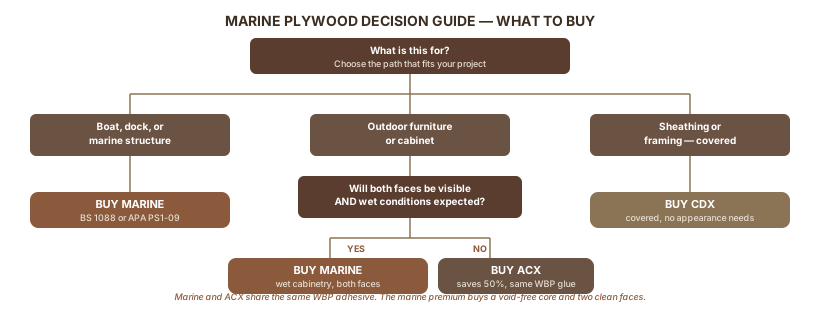
Buy marine plywood when:
- You're building or repairing a boat — hull, deck, transom, cockpit floor. Marine plywood is the correct material. Voids in a boat hull create water traps and stress concentration points.
- The structure will be in direct contact with water — docks, piers, pontoon decks
- Both faces will be visible and you need them clean — furniture where the inside is seen
- The panel will be bent into a curve — void-free core prevents stress fractures during bending and in service
- The application demands structural reliability in wet conditions — bathroom vanity cabinets, wet bar cabinetry
Buy ACX instead when:
- Building outdoor furniture with one visible face (table top, bench seat)
- Building an outdoor structure that will be painted or sided (the C-grade back faces in; no one sees it)
- Budget is a factor and the appearance difference won't show in the finished piece
The cost reality
For a 3/4" sheet: domestic APA marine fir runs about $90 at big-box stores. ACX runs about $45. BS 1088 okoume from a specialty dealer runs $120–$200. For a six-piece outdoor dining bench requiring eight sheets of plywood, that's a $360–$480 difference between marine fir and ACX. If one face will be painted and the other faces the ground, ACX is the right call.
Part 7: Working with Marine Plywood Outdoors
Proper sealing separates a deck that lasts 20 years from one that fails in three.
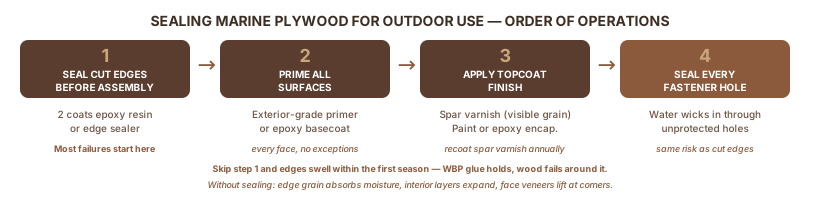
The order of operations:
-
Seal all cut edges before assembly — two coats of epoxy resin or a dedicated edge sealer, applied before installation. DIY Building Supplies notes that most premature marine plywood failures trace to unprotected edges, not surface moisture.
-
Prime all surfaces — exterior-grade primer or epoxy basecoat on every exposed face
-
Apply topcoat — spar varnish for visible wood grain (recoat annually), exterior paint for painted applications, full epoxy encapsulation for boat hulls
-
Seal every penetration — wherever a fastener goes through the panel, the hole needs sealing. Water wicks into fastener holes the same way it wicks into cut edges.
Without sealing, the edges swell within the first season. The interior layers absorb moisture through the edge grain, expand, and the face veneers lift at corners. Within one to two seasons outdoors, the panel structure fails. The WBP glue held. The layers never separated. The wood rotted around the bond.
Where This Fits
Related guides:
- Sheet Goods for Cabinets — full breakdown of plywood grades for cabinet and furniture work
- 4x8 Plywood — standard sheet sizes, how to transport and store sheet goods
- 3/4-Inch Plywood — the most-used thickness for furniture and casework
What to explore next: The material choice is only half the equation. The finish determines longevity. For outdoor furniture built with marine or ACX plywood, see Applying Polyurethane for a finish overview, or look for spar varnish guidance for anything in direct sun or rain.
Sources
Standards data, species characteristics, and pricing come from the APA PS1-09 specification, WoodenBoat School, WEST System, and retail sources.
- WoodenBoat School: Marine Plywood Consumer Guide — best overall guide to buying and identifying marine plywood
- WEST System/Epoxyworks: Marine-Grade Plywood Basics — species comparison, epoxy use, construction details
- Christine deMerchant: Marine Plywood Grades and Specifications — BS 1088 spec details
- Christine deMerchant: Marine Plywood Glues — WBP adhesive chemistry
- Curtis Lumber: ACX vs Marine Grade Plywood — comparison table, cost, applications
- BS 1088 on Wikipedia — standard history and overview
- DIY Building Supplies: Does Marine Plywood Need to Be Sealed — sealing requirements, edge protection
- DIY Building Supplies: How to Tell if Plywood Is Genuine Marine Grade — buyer identification guide
- Home Depot: 3/4-in AB Marine-Grade Plywood — retail pricing reference
- Forest Plywood: Best Plywood for Outdoor Use — CDX vs ACX vs marine outdoor comparison
- McIlvain Lumber: Okoume vs Sapele Marine Plywood — species comparison for imported panels
- WoodenBoat: Marine Plywood — expert editorial on grades and sourcing
Wood Species
Up Next
Red Oak vs. White Oak Plywood
WOOD & MATERIALS · Beginner