
Rubberwood at a Glance
Rubberwood is a real solid hardwood harvested from rubber trees once they stop producing latex, registering around 960 lbf on the Janka scale — softer than oak but harder than pine — and widely used in budget furniture, butcher blocks, and cutting boards. Because the trees are felled at end-of-latex-life rather than grown specifically for timber, it's considered an environmentally reclaimed material, which helps keep costs low. It machines cleanly with standard tools, accepts stains evenly, and glues well. The key limitation: it absorbs moisture readily, making it a poor choice for outdoor use or high-humidity environments without proper sealing.
| Botanical name | Hevea brasiliensis (plantation hardwood) |
| Janka hardness | 960 lbf — similar to black cherry, harder than pine or poplar |
| Best for | Indoor furniture, cutting boards, cabinetry, children's toys |
| Avoid for | Outdoor projects, high-moisture areas, structural framing |
| US availability | Mostly edge-glued panels (Lowe's, Home Depot); raw lumber is rare |
In this guide:
- What rubberwood actually is and where it comes from
- How it performs with hand and power tools
- Best and worst projects for rubberwood
- How it compares to oak, maple, and pine
Part 1: What Rubberwood Is and Where It Comes From
Rubberwood comes from Hevea brasiliensis, the same tree that produces natural rubber. The tree is native to the Amazon basin but today grows almost entirely on plantations in Thailand, Malaysia, Indonesia, and Vietnam.
The lifecycle works like this: a rubber tree gets planted on a plantation. After 7 to 10 years, workers begin tapping it for latex. That tapping continues for 20 to 30 years. When yields drop below what's profitable, the tree gets felled.
Before the 1980s, those spent trees were burned on the spot. The wood was considered waste. Then Malaysia figured out how to process it into usable lumber, and the rubberwood furniture industry took off. According to an FAO report on rubberwood utilization, Malaysian log production increased 60-fold between the mid-1980s and mid-1990s.

It's real wood, not engineered
This is the most common misconception. Because rubberwood shows up in affordable furniture, people assume it's particle board or MDF. It's not. Rubberwood is solid wood with grain, growth rings, and intact cell structure. You can sand it, stain it, and refinish it the same way you'd refinish oak or maple.
The name causes confusion too. The wood isn't rubbery or flexible. All the latex has been harvested before the tree is felled. What you're working with is a pale, straight-grained hardwood. You'll sometimes see it called "parawood" (after the Brazilian state of Pará where the tree originated) or "Malaysian Oak" (a marketing name that overpromises).
Classification and hardness
Rubberwood is botanically a hardwood. Hevea brasiliensis is an angiosperm, a flowering plant with enclosed seeds. That puts it in the same category as oak, maple, and cherry.
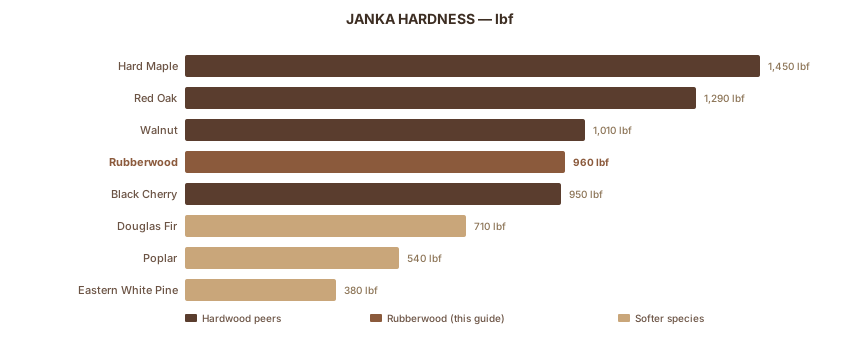
In practice, it's a medium-density hardwood. Izabal Wood's species data puts it at 960 lbf on the Janka scale, right next to black cherry (950 lbf). That's harder than every commercial softwood but softer than red oak (1,290 lbf) or hard maple (1,450 lbf).
| Species | Janka (lbf) |
|---|---|
| Hard Maple | 1,450 |
| Red Oak | 1,290 |
| Walnut | 1,010 |
| Rubberwood | 960 |
| Black Cherry | 950 |
| Douglas Fir | 710 |
| Poplar | 540 |
| Eastern White Pine | 380 |
Why it needs chemical treatment
Fresh-cut rubberwood has an unusually high starch content. Without treatment, fungal staining and insect attack can start within hours of felling. Every piece of commercial rubberwood goes through pressurized immersion in a boron preservative solution, followed by kiln drying. The boron compounds have low toxicity (the EPA classifies boric acid as "practically non-toxic" at typical exposure levels), and the treatment gets locked into the wood during kiln drying. Finished products pose no exposure risk.
Part 2: How Rubberwood Performs in the Shop
Most online guides stop at "easy to work with." That's not enough to make decisions in the shop.
Cutting and machining
Rubberwood saws, planes, and routes cleanly. The straight grain means tearout is rare. Standard tooling works fine, and no source documents abnormal blade dulling. It turns well on the lathe and holds fine detail for carving.
One thing to watch: Izabal Wood's technical data notes it may split when nailed. Pre-drill your holes, especially within an inch of the end grain.
Rubberwood glues well with standard PVA and aliphatic resin adhesives. The fact that the entire Southeast Asian furniture industry runs on finger-jointed rubberwood panels is proof that the glue bonds hold. One caveat: research on boron-treated wood shows it may have slightly reduced bond-line shear strength. For furniture-grade joints with good clamping pressure, this is a non-issue.
Finishing
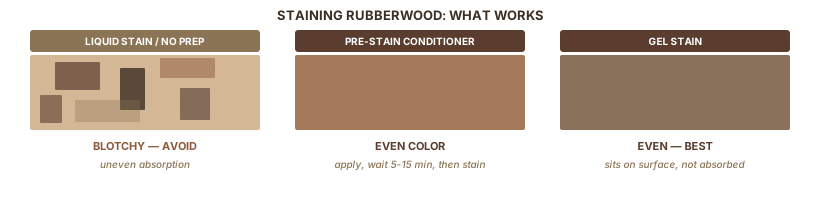
Rubberwood is blotch-prone. The open pores absorb stain unevenly. Denser areas soak up less; softer spots absorb too much. Skip the pre-stain conditioner and you'll get the muddy, splotchy result that fills negative product reviews.
What works well:
- Gel stains give the most uniform color. The thick formula sits on the surface instead of soaking in unevenly. Wipe on, wait 5 to 10 minutes, wipe off excess.
- Pre-stain wood conditioner is mandatory for any liquid stain. Apply it, wait 5 to 15 minutes, then stain within two hours.
- Dark stains (walnut, espresso, dark cherry) are the most forgiving. They hide grain variation and minor blotching.
- Oil-based polyurethane builds a durable topcoat and adds a warm amber tone. Danish oil, teak oil, and linseed oil also work well with the open-pore structure.
- Clear lacquer preserves the natural blonde-to-tan color. This is the standard commercial furniture finish.
What causes problems:
- Light stains, whitewash, and pickled finishes highlight every absorption inconsistency.
- Cool-toned stains (gray, blue-toned) can shift toward greenish because of rubberwood's underlying yellow-pink undertone.
- Sanding past 220 grit before staining burnishes the surface and blocks stain penetration. Stop at 150 to 180 for stained work.
Moisture and dimensional stability
Rubberwood's shrinkage numbers are favorable: 2.3% radial, 5.1% tangential, T/R ratio of 2.2. Those absolute values are lower than oak or maple. Less total movement. The T/R ratio is average for hardwoods, so it moves proportionally the same way.
The catch is speed. Rubberwood has a diffuse-porous structure (evenly distributed pores, unlike the visible ring patterns in oak). That means it absorbs and releases moisture faster than ring-porous species. Wood movement shows up sooner if you skip the sealing.
Practical storage rules:
- Acclimate for at least 5 to 7 days in your shop before milling. Use a moisture meter and wait until the reading is within 1 to 2% of your shop's equilibrium moisture content.
- Sticker at 12-inch intervals (closer than the standard 16 to 24 inches for most species). Woodworking Network documents rubberwood's medium-to-high warp risk during conditioning.
- Weight the top of your pile.
- Keep rubberwood away from heat sources. It's more temperature-sensitive than domestic oak or maple. Cupping near floor vents and fireplaces is a real problem.
Part 3: Is Rubberwood Safe? The Toxicity Question
"Is rubberwood toxic" gets about 150 monthly searches. Most guides dodge the question. The evidence is clear.
The short answer: no. The Wood Database's allergy and toxicity chart, the most comprehensive wood allergy resource available, does not list rubberwood. The wood has low resin content and doesn't release harmful chemicals.
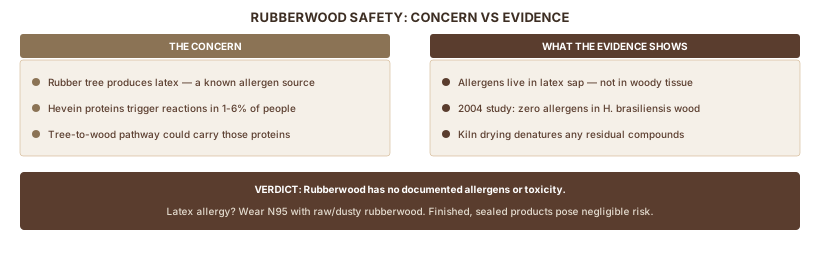
The latex allergy question: Because the tree produces latex, you'd expect the wood to contain allergens. A 2004 study on allergens in Hevea wood products tested rubber tree wood samples for allergenic proteins and found none. The hevein proteins that trigger latex allergy live in the sap, not the woody tissue. Once the latex is harvested and the wood is kiln-dried, those proteins are denatured or absent.
If you have a severe (anaphylactic) latex allergy, use caution with unfinished rubberwood and rubberwood sawdust. Finished, sealed furniture poses negligible risk. For everyone else, standard woodworking dust safety applies: run your dust collection, wear an N95 respirator, and don't breathe wood dust of any species.
Part 4: Best and Worst Uses for Rubberwood
Where it works
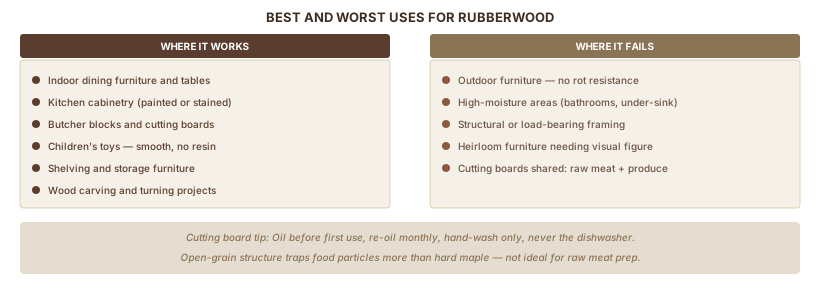
- Indoor dining furniture. Tables and chairs. The hardness is adequate for dining surfaces, and the straight grain takes stain and paint evenly.
- Kitchen cabinetry. Takes paint, stain, and clear finishes uniformly. Works well for face frames and cabinet doors.
- Butcher blocks and cutting boards. Commercially available as edge-glued panels at major retailers. Food-safe when finished with mineral oil or beeswax-mineral oil blend.
- Children's toys. One of the top three species used in commercial toy production (alongside beech and birch). Smooth surface, no resin pockets, dimensionally stable.
- Shelving and storage furniture. Consistent, clear-grade stock with minimal knots.
- Wood carving and turning. Holds fine detail, smooth uniform texture, low tearout risk.
Where it fails
- Outdoor furniture and structures. No natural rot resistance. The boron preservative leaches out in rain. Rubberwood absorbs moisture fast and decays quickly when exposed. Don't use it for decks, garden furniture, or any exterior application.
- High-moisture interiors. Bathroom vanities, under-sink cabinetry, or anywhere with frequent direct water contact. Even indoors, sustained humidity causes warping and fungal risk.
- Structural framing. Not a substitute for construction-grade dimensional lumber. The tree's small trunk diameter and moderate density make it unsuitable for load-bearing applications.
- Heirloom furniture where grain matters. Rubberwood's grain is plain and unremarkable. It lacks the figure of walnut, the cathedral patterns of oak, and the shimmer of hard maple. If visual character is the point, you'll be disappointed.
A note on cutting boards
Rubberwood cutting boards work, but they have a real limitation: the open-pore structure traps food particles more than hard maple's closed, fine grain does. That's a cross-contamination concern if you're switching between raw meat and produce on the same board.
Most commercial rubberwood cutting boards are finger-jointed, and those joints can separate after extended wet-dry cycling. Oil before first use, re-oil monthly, wash immediately after use, and never put it in the dishwasher. It's adequate for everyday kitchen use but hard maple remains the gold standard for serious cutting boards.
Part 5: Rubberwood vs. Oak, Maple, Pine, and Acacia
If you're deciding between rubberwood and the species you're already familiar with, this table covers the differences that matter for project selection.
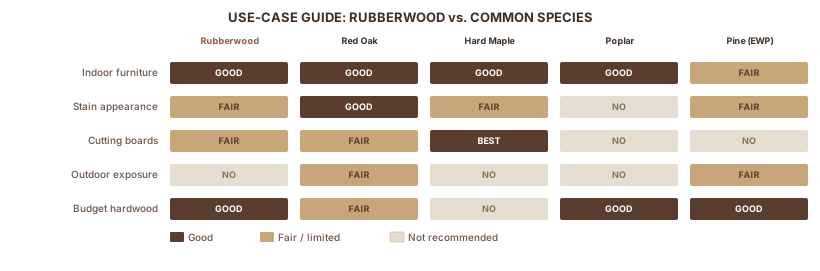
| Property | Rubberwood | Red Oak | Hard Maple | Poplar | Pine (EWP) | Acacia |
|---|---|---|---|---|---|---|
| Janka (lbf) | 960 | 1,290 | 1,450 | 540 | 380 | 1,100-2,300 |
| US retail ($/bf) | N/A (panels only) | $4-$6 | $5-$8 | $3-$5 | $2-$4 | $10+ |
| Workability | Easy, straight grain | Moderate, open grain | Hard on tooling | Very easy | Very easy | Dense, dulls tools |
| Staining | Blotches without conditioner | Takes stain well | Blotch-prone | Poor; best painted | Uneven near knots | Dramatic but inconsistent |
| Outdoor use | No | Moderate (white oak: yes) | No | No | Treated only | Some species: yes |
| Best for | Budget indoor furniture, cutting boards | Furniture, flooring, cabinetry | Flooring, cutting boards | Painted furniture | Shelving, rustic projects | Outdoor, accent pieces |
Rubberwood fills the gap between softwood affordability and hardwood performance. Harder and more durable than pine or poplar. Cheaper than oak or maple when you can find it. The tradeoff: limited availability as raw lumber and plain aesthetics.
Part 6: Where to Buy Rubberwood and What It Costs
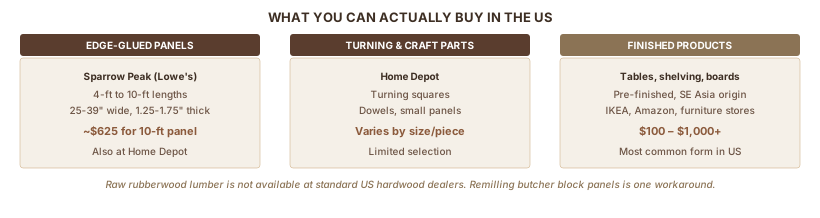
Raw rubberwood lumber is almost impossible to buy through standard US retail channels. The Wood Database notes that rubberwood is "rarely exported in raw lumber form, but instead worked into a variety of furniture, kitchen, and other household items." It doesn't show up in the price lists at major hardwood dealers like Johnson Creek Hardwoods, Hearne Hardwoods, or Woodworkers Source. Rockler doesn't carry it.
What you can actually buy
- Edge-glued butcher block panels at Lowe's (sold under the Sparrow Peak brand, labeled "Hevea"). Available in 4-foot to 10-foot lengths, 25 to 39 inches wide, 1.25 to 1.75 inches thick. A 10-foot panel runs around $625.
- Pre-made components at Home Depot: turning squares, dowels, and panels.
- Imported finished products: tables, shelving, cutting boards from Southeast Asian manufacturers.
Some makers buy rubberwood butcher block panels and remill them for smaller projects. It's not ideal, but it's one of the few ways to get the species into your shop in the US.
Why it's so cheap where it exists
Rubberwood is a plantation byproduct. The trees have already earned 25 to 30 years of latex revenue before anyone considers the wood. No virgin land is cleared specifically for rubberwood timber. And the value-add work (finger-jointing, edge-gluing, surfacing, finishing) happens at the source in Southeast Asia, where labor and processing costs are lower. By the time it reaches a US retailer, it's a finished product, not raw lumber.
Part 7: The Sustainability Question
Rubberwood gets marketed as "eco-friendly." The story is partly true and partly marketing.
The legitimate case
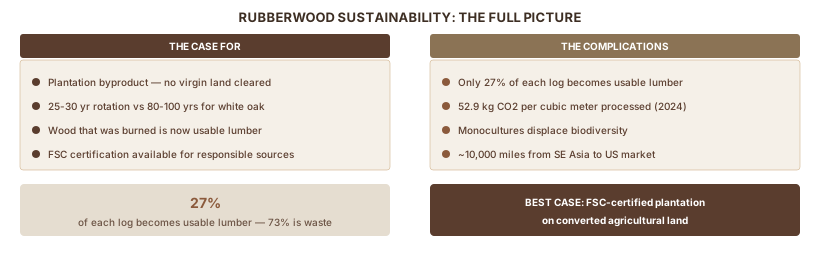
The trees were already growing for latex. Using the wood instead of burning it prevents waste and captures carbon that would otherwise be released. The 25-to-30-year rotation cycle is much faster than the 80 to 100 years needed for temperate hardwoods like white oak. FSC certification is available for sustainably managed rubber plantations.
The complications
A 2024 study in BioResources measured rubberwood sawmilling in Peninsular Malaysia and found significant environmental costs. Only about 27% of each log becomes usable lumber. The other 73% is waste. Processing emissions: 52.9 kg of CO2 per cubic meter of sawn timber. The study's authors directly called the "green label" into question.
Beyond the mill: rubber plantations are monocultures that displace native biodiversity. Thailand lost 122,000 hectares of natural forest in 2021 alone (Global Forest Watch data). And every piece of rubberwood furniture in the US traveled roughly 10,000 miles from Southeast Asia.
Rubberwood's sustainability case is strongest when the plantation is FSC-certified and operating on previously converted agricultural land. It's weakest when plantation expansion displaces primary forest, or when you compare it to buying domestic hardwood from a local sawyer.
Where This Fits
Rubberwood is an affordable, workable hardwood that does well in indoor projects where budget matters more than grain character. It machines cleanly, glues reliably, and takes most finishes when you prep the surface properly.
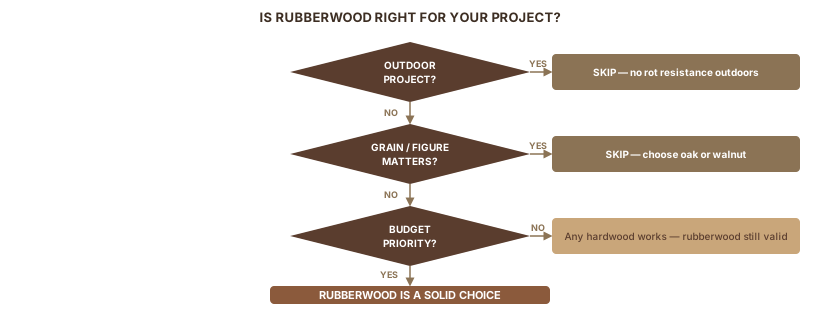
It's not a replacement for oak or maple when you need durability, rot resistance, or visual figure. And it won't work outdoors under any circumstances.
If you're building a cutting board on a budget, furnishing a dining room without spending $2,000 on lumber, or making cabinet doors you plan to paint, rubberwood is a legitimate choice. If you're building something you want to hand down, choose a species with more character and durability.
For more on choosing wood for your projects, see the Hardwood Species Guide and the Wood Species Quick-Reference Card.
Sources
This guide draws on species databases, peer-reviewed research, trade publications, and practitioner forums.
- Izabal Wood — Rubberwood species data — physical properties, mechanical data, workability notes
- FAO — Utilization of Rubberwood — Malaysia industry history, production data, 60-fold growth
- The Wood Database — Rubberwood — species reference, sourcing notes
- The Wood Database — Wood Allergies and Toxicity — allergy and toxicity chart
- ResearchGate — Are there allergens in Hevea brasiliensis wood products? (2004) — no allergenic proteins found in wood samples
- BioResources — Carbon Footprint of Rubberwood Sawmilling (2024) — 27% milling yield, 52.9 kg CO2/m3 emissions
- ScienceDirect — Boron compounds and adhesive bonding — effect of boron treatment on glue bond strength
- Woodworking Network — Rubberwood — sticker spacing, warp risk, industry context
- Wikipedia — Hevea brasiliensis — botanical classification, geographic history
- Wikipedia — Rubberwood — lifecycle, common names, treatment process
Up Next
Light Oak: Wood, Stain, and Finish Guide
WOOD & MATERIALS · Beginner