
MDF Primer at a Glance
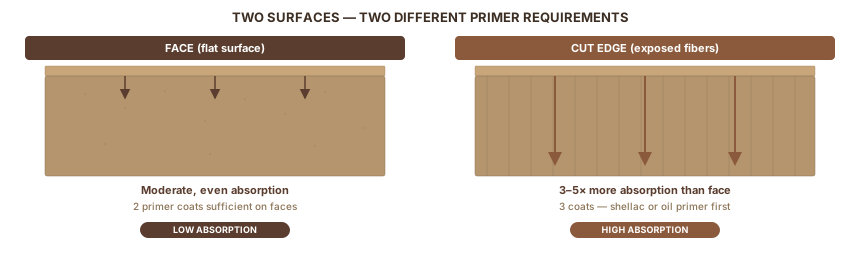
Fiber puffing is the swelling and roughening of MDF surface fibers that occurs when water-based primers wick moisture into the board's porous edges, which act like bundles of microscopic straws and absorb liquid faster than any binder can seal them. Unlike the flat faces, MDF edges are almost entirely exposed fiber ends — absorption rates can be five to ten times higher than the face. The fix is straightforward: seal with a solvent-based primer — oil-based or shellac — before any water-based product touches the board. Apply two coats on faces, three on edges.
| Primer type | Oil-based or shellac-based (not standard latex) |
| Why not latex | Water content causes MDF fibers to swell and puff up |
| Coats on faces | 2 coats minimum, 220-grit between coats |
| Coats on edges | 3 coats (or shellac first + 2 standard coats) |
| Sanding before primer | 120-grit faces, 150-grit edges |
| Best beginner product | Kilz Original oil-based, ~$15–20/quart |
In this guide:
- Why MDF absorbs paint unevenly and what goes wrong without primer
- Which primer type to use and when to upgrade to shellac
- How to apply primer correctly, edges first
- What to do when something goes wrong
Part 1: Why MDF Is Different
MDF (medium-density fiberboard) is made by compressing wood fibers with urea-formaldehyde resin, wax, and heat into a dense, uniform sheet. The result looks and cuts like smooth wood but behaves very differently when you try to paint it.
Two surfaces exist on every MDF board, and they're not remotely alike.
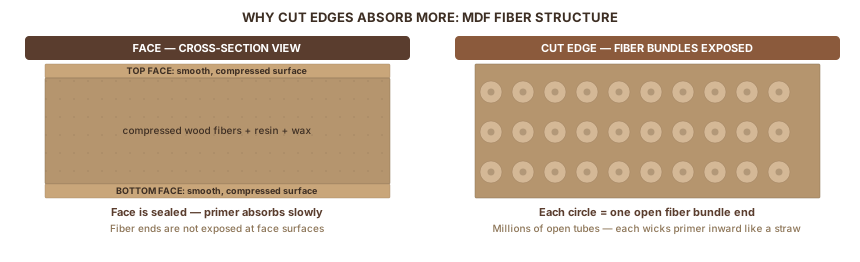
The face is the flat top and bottom. It's compressed dense during manufacturing, still porous, but moderately so. Paint absorbs somewhat evenly here, though without primer you'll use far more paint than you should.
The edges are any surface created by cutting the board. Each cut exposes the raw end grain of millions of compressed fiber bundles. Picture a bundle of drinking straws sliced across their diameter: every straw is open, pointing outward, ready to absorb whatever touches it. Woodweb's MDF finishing knowledge base puts edge absorption at 3–5 times higher than the face.
Apply a water-based product to those exposed edges and the fibers absorb the water and swell. They push up above the surface and dry standing erect, creating a rough, fuzzy texture called fiber puffing or grain raising. Woodweb's grain-raising reference documents this as a consistent behavior across water-based primers on MDF. On faces, water-based products cause milder fuzz. On edges, the swelling can be severe enough to require completely re-prepping the surface.
Painting MDF without primer produces two predictable outcomes. On faces: the paint absorbs unevenly, leaving blotchy patches where the surface drank the paint faster. You'll burn through 3–4 times more paint trying to cover it and still end up with a rough, inconsistent result. On edges: a water-based topcoat causes the edge to swell, the paint surface buckles, and no amount of extra coats smooths it out.
Seal the surface with a primer that contains no water before any water-based topcoat touches the wood.
Part 2: Choosing the Right Primer
Use oil-based primer for most MDF projects.
Oil-based primers use mineral spirits as the carrier, not water, so they don't cause fiber raising. They penetrate the MDF structure and create a solid bond. They sand cleanly once dry. Kilz Original (oil-based, ~$15–20/quart) is at every hardware store and works well on both faces and edges.
For visible edges on furniture or cabinet doors, step up to shellac.
Zinsser B-I-N (shellac-based primer) uses denatured alcohol as the carrier. No water, no fiber raising. The shellac penetrates the MDF fibers and hardens them in place. Per the Zinsser B-I-N technical data sheet: touch dry in 25 minutes, recoat in 45 minutes. Professional cabinet painters reach for B-I-N on MDF edges specifically because it works faster and seals better than oil-based. One downside: it's hard on brushes. Buy cheap throwaway brushes or clean immediately with denatured alcohol.
Standard water-based latex primer does not work on bare MDF. It raises the fibers on faces and causes severe swelling on edges. The only water-based products that work are specialty formulations. Zinsser Bulls Eye 1-2-3 is acceptable on faces that have already been sealed with oil or shellac primer, but it's not a first coat on raw MDF.
If budget is the primary constraint, diluted PVA glue (1 part PVA to 2 parts water) brushed onto edges before priming acts as a cheap edge sealer. Woodweb's edge-sealing discussion documents this approach alongside the shellac and oil-based options. It locks the fibers enough that a standard primer can work. It adds two or more hours to the process. B-I-N aerosol cans (~$13) are faster and more foolproof.
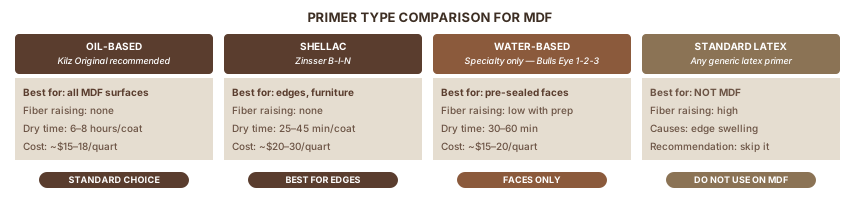
| Primer type | Best for | Dry time | Fiber raising risk | Cost |
|---|---|---|---|---|
| Oil-based (Kilz Original) | All MDF surfaces | 6–24 hours | None | $15–20/qt |
| Shellac (Zinsser B-I-N) | Edges especially | 25–45 min | None | $20–30/qt |
| Water-based specialty | Pre-sealed faces, low-VOC | 30–60 min | Low with prep | $15–20/qt |
| Standard latex | Do not use on bare MDF | — | High | — |
Part 3: Applying Primer, Edges First
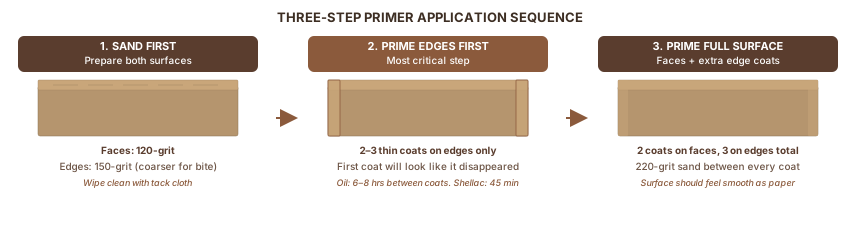
The sequence matters. Edges need more coats than faces, and you need to give them that attention before touching the faces.
Step 1: Sand
Sand faces with 120-grit sandpaper. This removes the thin manufacturing film from the surface and creates small scratches the primer bonds to. For edges, use 150-grit. Do not sand edges finer than 150 before priming. A too-smooth edge reduces primer bite.
Wipe all surfaces with a tack cloth. Sanding dust left behind breaks the bond between primer and wood.
Step 2: Treat edges first
Apply primer to edges before touching the faces. Edges are thirstier. They'll absorb the first coat almost completely, and you need to see that before moving on.
Oil-based route: Apply 2–3 thin coats to edges only. The first coat will look like it disappeared into the surface. That's normal. Apply a second coat, let it dry fully (6–8 hours minimum), and sand with 220-grit. Run your finger across the edge. If it still feels gritty or rough, apply a third coat.
Shellac (B-I-N) route: Brush a wet coat onto edges. Let dry 45 minutes. Apply a second coat. Once done with edges, proceed to the full surface.
PVA budget route: Brush on a 1:2 PVA/water mixture. Let dry 1–2 hours. Sand lightly with 220-grit. Repeat once. Then prime the whole surface normally.
Step 3: Prime the full surface
Apply thin coats. Two moderate coats beat one thick coat. Thick coats run, dry unevenly, and don't seal as well.
Use a 4-inch roller with a 1/4-inch nap for flat faces. Use a brush for edges and corners. The first coat on bare MDF faces will look uneven, thinner in some spots, slightly rough in others. That's expected. Let it dry completely.
Sand with 220-grit when dry. You're knocking back raised fibers and brush marks, not sanding down to bare wood. Wipe dust. Apply a second coat. Edges get one more coat than faces. Two coats on faces means three coats on edges.
Final sand with 220-grit before topcoat. The surface should feel smooth and even, like fine-grained paper.
Sanding grit reference
| Stage | Face | Edges | Note |
|---|---|---|---|
| Before any primer | 120-grit | 150-grit | Coarser on edges for primer bite |
| After 1st primer coat | 220-grit | 180–220-grit | Knock back raised fibers |
| After 2nd primer coat | 220–320-grit | 220-grit | Surface should feel smooth |
| Before topcoat | 320-grit | 220-grit | Light pass only |
Part 4: What Goes Wrong and How to Fix It
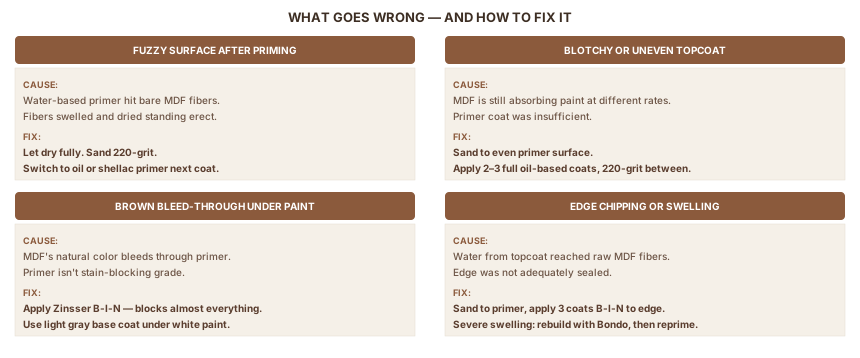
Fuzzy surface after priming
The surface feels like fine sandpaper after primer dries. Water from a water-based primer hit the MDF fibers and caused them to swell. This is fiber raising. Most common on edges.
Let it dry completely. Sand with 220-grit to knock the raised fibers flat. Switch to oil-based or shellac primer for the next coat. If the surface still feels rough after sanding, apply another coat of oil or shellac primer and sand again.
Blotchy or uneven topcoat
After applying paint, some areas look darker, shinier, or more textured than others. Parts of the MDF are still absorbing paint at different rates. The primer wasn't enough.
Sand back to an even primer surface. Apply two to three full coats of oil-based primer, sanding 220-grit between each coat. The surface should look uniformly opaque before topcoat goes on.
Brown bleed-through under light paint
White or light-colored paint shows brownish undertones after drying. MDF's natural color is bleeding through primer that isn't stain-blocking.
Use a stain-blocking primer for the next coat. Zinsser B-I-N blocks almost everything. General Finishes recommends applying a light gray base coat first on MDF intended for white paint, to counter the brown cast before applying white over it.
Edge chipping or swelling after painting
Paint chips starting at edges, or edges visibly swell after topcoat application. Water from the topcoat reached the raw MDF fibers. The edge wasn't sealed adequately.
For minor chipping: sand back to the primer surface, apply three coats of B-I-N to the edges, sand between each, then repaint. For severe swelling: rebuild with Bondo two-part polyester filler, sand smooth, then prime with three coats of B-I-N before repainting.
Part 5: Product Recommendations by Budget
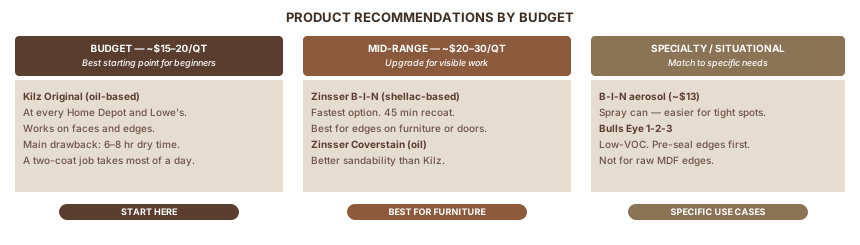
Budget tier (~$15–20/quart)
Kilz Original Oil-Based is the starting recommendation for most beginners. It's at every Home Depot and Lowe's, costs around $15–18 per quart, and works on both faces and edges. The main drawback is dry time. Six to eight hours between coats means a two-coat job takes most of a day.
Zinsser Bulls Eye 1-2-3 (water-based) is acceptable on MDF faces once edges have been pre-treated with oil or shellac primer. Easy cleanup with soap and water. Not for bare MDF edges.
Mid-range (~$20–30/quart)
Zinsser Coverstain is oil-based and what many professional painters reach for over Kilz. Better sandability, slightly better coverage. Worth the upgrade for cabinet doors or furniture that sees daily use.
Zinsser B-I-N (shellac-based) is the most forgiving and fastest option. If you want to stop thinking about primer and just get a result, apply B-I-N everywhere. The odor is strong. Work with ventilation, or outside.
For specific situations
| Situation | Product | Notes |
|---|---|---|
| First project, faces only | Kilz Original | ~$18/qt, available everywhere |
| Visible edges on furniture | Add Zinsser B-I-N | Shellac, 45 min recoat |
| Cabinet doors or daily-use items | Zinsser Coverstain | Better sandability |
| Low VOC needed | Zinsser Bulls Eye 1-2-3 | Pre-treat edges with oil or shellac first |
| Tightest possible budget | PVA/water on edges + Kilz | Gets the job done, adds time |
| Small project, no brush needed | B-I-N aerosol (~$13) | Spray can, easier for tight spots |
Part 6: Paint or Stain? Finish Options After Priming
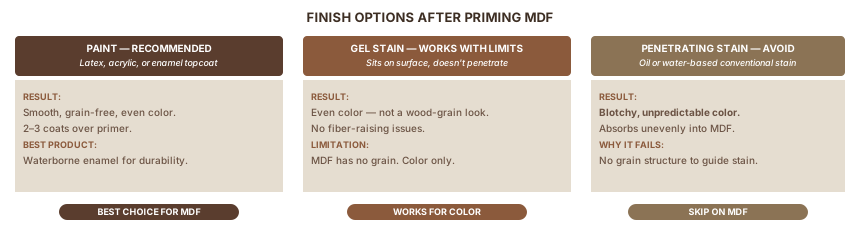
Paint is the right choice for MDF
MDF paints beautifully after proper priming. The flat, grain-free surface produces even color with no blotching. Any latex, acrylic, or enamel topcoat works. For cabinet doors, shelves, and furniture that takes daily contact, use a waterborne enamel like Benjamin Moore Advance or Sherwin-Williams Emerald Urethane. These produce a harder film than standard latex and resist scratches better.
Two to three coats of topcoat is typical. Sand with 220-grit between coats for a smooth result.
Gel stain works, but with realistic expectations
Gel stain sits on the surface rather than penetrating, so it doesn't cause the same fiber-raising issues as penetrating stains. You can apply oil-based gel stain (General Finishes Gel Stain, [Minwax Gel Stain](/guides/minwax-stain-chart)) over primed MDF for a colored effect.
The honest limitation: MDF has no grain pattern. The result is an even, tinted surface, not a wood appearance. If the goal is color, gel stain works well. If the goal is to make MDF look like solid wood, it won't. Real wood veneer applied over MDF is the only way to get a genuine wood-grain finish.
Conventional wood stain doesn't work
Standard penetrating oil or water-based stains absorb unevenly into MDF's structure, producing blotchy, unpredictable color. Even with a pre-stain conditioner the results are unreliable. Skip penetrating stain on MDF.
Before you prime, you need stock. What Is MDF covers material properties, and Sheet Goods for Cabinets covers when MDF is the right call over plywood.
Sources
This guide draws on manufacturer technical data sheets, professional painting forums, and woodworking trade knowledge bases. Primary sources for application technique come from cabinet painters and MDF fabricators who work with this material daily.
- Woodweb — Prepping MDF for Paint — professional prep sequence and product recommendations
- Woodweb — Preventing the Grain-Raising Effect — fiber raising mechanism, water-based primer behavior on MDF
- Woodweb — Sealing Cut MDF Edges — edge sealing methods including PVA, shellac, and oil-based approaches
- Zinsser B-I-N Technical Data Sheet — official dry/recoat times and application specs
- Kilz Original product page — oil-based primer specifications
- General Finishes — How to Prep MDF Before Painting — manufacturer guidance on MDF preparation and stain-blocking
- Woodweb — Staining MDF — professional assessment of staining options for MDF
Also Referenced
Up Next
Is Melamine Good for Cabinet Boxes?
WOOD & MATERIALS · Beginner