
Oak Plywood at a Glance
Oak plywood is hardwood plywood with a thin oak face veneer over a wood or MDF core. Two species, red oak and white oak, look very different and behave differently in the shop. Red oak is the affordable, widely available option with bold open grain and a warm brown color. White oak costs more, has a closed grain, and handles moisture better. For most beginners building cabinets or shelving, a B-2 grade 3/4" red oak sheet from Home Depot is the right starting point.
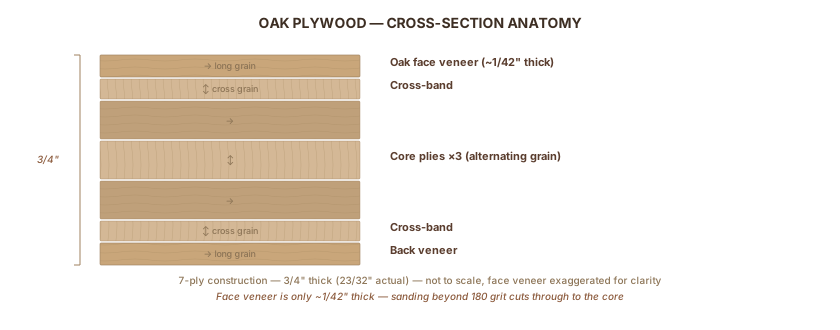
| Sheet size | 4 ft × 8 ft (standard) |
| Common thickness | 3/4" (actual: 23/32") — see thickness guide |
| Red oak 3/4" cost | $65–$95 per sheet at big box stores |
| White oak 3/4" cost | $95–$130+ per sheet at lumber yards |
| Face veneer thickness | ~1/42" — do not over-sand |
| Best retail brand | Columbia Forest PureBond (red oak, formaldehyde-free) |
In this guide:
- Red oak vs. white oak — which species to buy
- Veneer cuts: flat, quarter, and rift sawn
- Reading the grade label: A-2, B-2, and what they mean
- Cutting and finishing oak plywood
- Where to buy and what to inspect
Part 1: Red Oak vs. White Oak Plywood
Red oak is what most people picture when they say "oak plywood." It's stocked at every Home Depot and Lowe's, costs less than white oak, and has the bold, open-grained look that dominated American kitchen cabinetry for decades. White oak is cooler in tone, tighter in grain, more expensive, and harder to find at retail. Choosing between them is the first decision to make before you shop.
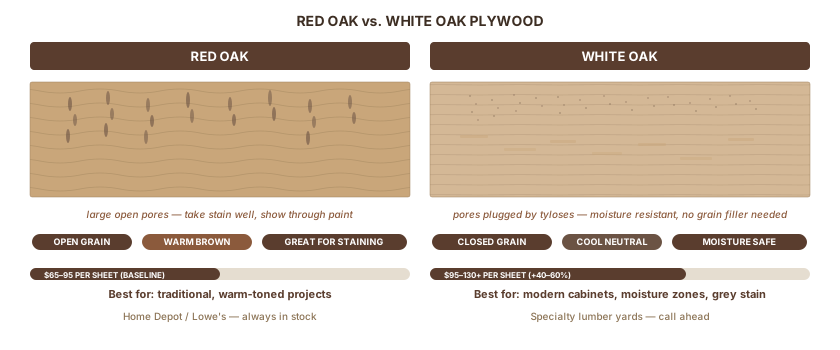
Red Oak Plywood
Red oak has large open pores you can see with the naked eye. Run your fingertip across raw red oak and you can feel the grain channels. That open grain is responsible for two things: excellent staining and extra work for paint-grade projects.
Staining is easy. Red oak takes oil-based and gel stains well, without the blotching you get from pine or maple. No pre-stain conditioner needed. The pores absorb pigment evenly and the grain pattern comes out rich.
Paint-grade is harder. Those same pores telegraph through paint as visible texture unless you fill them first. A grain filler (Aquacoat, Behlen Pore-a-Pack) smooths the surface before priming.
Red oak isn't moisture resistant. Keep it away from exterior applications and damp environments like mudrooms unless it's well-sealed.
Best for: Traditional kitchen cabinets, warm-toned furniture, any project where natural wood grain is part of the look.
White Oak Plywood
White oak's pores are plugged with tyloses: bubble-like cells that fill the grain channels naturally. Windsor Plywood's white oak reference notes that this closed-cell structure is the same reason white oak was used for wine barrels and ship planking for centuries. Liquids can't wick into the wood.
White oak handles moisture better than red oak, stains more evenly (closed pores absorb consistently), and needs no grain filling before painting.
The color is cooler and more neutral than red oak. When quarter-sawn, white oak shows its medullary rays as fleck: shimmery silver-brown streaks across the grain that appear when light hits the surface at an angle. No North American hardwood has a more distinctive quarter-sawn appearance. White oak now dominates contemporary and Scandinavian-influenced kitchen cabinetry because of that look.
White oak costs more and requires a specialty lumber yard for anything beyond flat-sawn. It's worth the upgrade for moisture-prone spaces or when the contemporary look is the point.
Best for: Modern and Scandinavian-influenced cabinets, furniture near moisture, projects where grey or silver stain is planned.
Which to Buy
| Situation | Buy This |
|---|---|
| Traditional, warm look | Red oak |
| Modern, contemporary, minimalist | White oak |
| Tight budget | Red oak (widely available, $65–$95) |
| Near moisture (mudroom, bathroom vanity) | White oak |
| Buying today at Home Depot | Red oak |
| Willing to special order from a lumber yard | White oak |
| Paint-grade cabinets, smooth finish | White oak (no grain filler needed) |
Part 2: Veneer Cuts: Flat, Quarter, and Rift Sawn
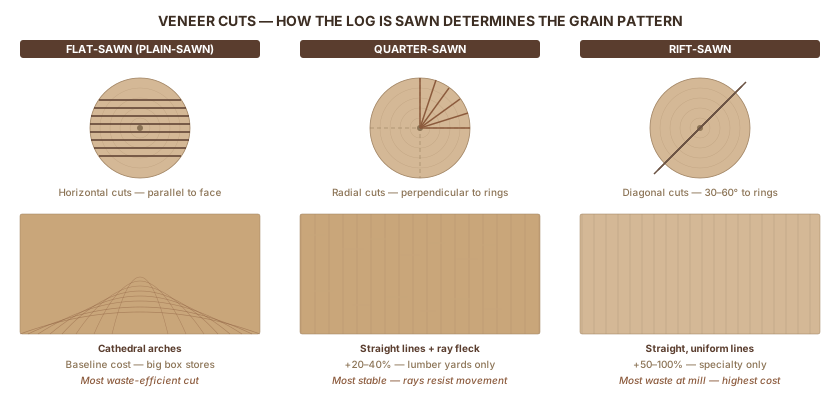
The same oak species produces three different appearances depending on how the veneer is sliced from the log. The difference matters most for white oak, where a flat-sawn and rift-sawn sheet look nothing alike.
Flat-Sawn (Plain-Sawn)
Flat-sawn is the default at every retail store. The log is sliced parallel to its face, yielding wide planks with a flowing "cathedral" arch pattern: the rounded waves that run up the center of the board.
It's the most affordable cut because it wastes the least wood. If the product doesn't specify a cut, assume flat-sawn.
Quarter-Sawn
The log is first quartered, then each quarter is sawn perpendicular to the growth rings. This produces straight grain lines and, in white oak, pronounced medullary ray fleck — the wavy, shimmery streaks that appear when light hits the surface at an angle.
As Fifth Wall Designs describes it, the medullary rays in quarter-sawn white oak can run both parallel and perpendicular to the grain, producing a rich, layered pattern. This fleck is a hallmark of traditional craftsman and arts-and-crafts furniture, and it's having a revival in high-end contemporary cabinetry.
Quarter-sawn is also more dimensionally stable than flat-sawn. Seasonal movement is mostly in thickness rather than width, so panels stay flatter over time.
Cost: 20–40% more than flat-sawn. Requires a specialty lumber yard.
Rift-Sawn
Cut at a 30–60 degree angle to the growth rings, rift-sawn produces the straightest, most uniform grain lines with minimal or no fleck. Showplace Cabinetry's comparison guide describes this "combed grain" look as the dominant choice for modern and minimalist kitchen design.
Rift-sawn costs the most because it generates the most waste at the mill. It's the cut most contemporary kitchen cabinet makers specify when working in white oak.
Cost: 50–100% more than flat-sawn. Requires a specialty supplier.
Cut Comparison
| Cut | Grain Pattern | Fleck | Best For | Cost vs. Flat | Where to Buy |
|---|---|---|---|---|---|
| Flat-sawn | Cathedral arches | Minimal | Traditional, warm looks | Baseline | Big box + lumber yards |
| Quarter-sawn | Straight lines + heavy fleck | Prominent | Arts & Crafts, transitional | +20–40% | Lumber yards only |
| Rift-sawn | Straight "combed" lines | Minimal | Modern, minimalist | +50–100% | Specialty suppliers |
Part 3: Reading the Grade Label
Every sheet of hardwood plywood has a two-part grade stamped on the edge: a letter for the face, a number for the back. A-2. B-2. 1-1.
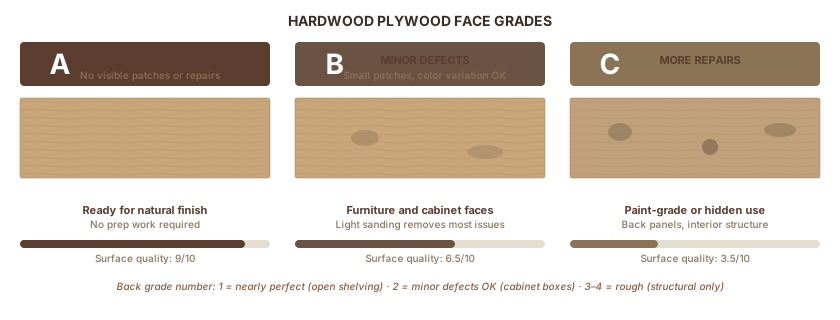
Face grades (the letter):
- A: Smooth, uniform veneer. Small pin knots or mineral streaks OK, but no visible patches. Ready for a natural finish without prep
- B: Some defects — knots up to 3/4", color variation, sanded patches (filled repairs). Still usable for furniture and visible cabinet faces
- C: More knots, filler, color variation. Paint-grade or hidden interior use
Back grades (the number):
- 1: Nearly as good as the A face. Choose this if the back will be visible (open shelving, display cabinet)
- 2: Some defects acceptable. Cabinet box interiors, shelving backs where a little imperfection is fine
- 3 or 4: Rough backs — only for structural applications where nobody sees the back
What to buy for your project:
| Project | Grade |
|---|---|
| Furniture, visible surfaces | A-2 or A-1 |
| Cabinet doors and drawer fronts | A-2 |
| Cabinet box sides (back won't show) | B-2 |
| Interior shelving, hidden structure | B-2 or B-3 |
| Open shelving where the back is visible | A-1 |
At Home Depot, Columbia Forest PureBond 3/4" red oak is graded B-2 equivalent — Anderson Plywood's grading reference describes this as a "smooth face with occasional small blemishes." That's fine for most projects.
Part 4: Working with Oak Plywood
Cutting Without Tearout
Oak's veneer face is roughly 1/42" thick. Thin fibers chip at the cut edge when the blade tears through instead of slicing.
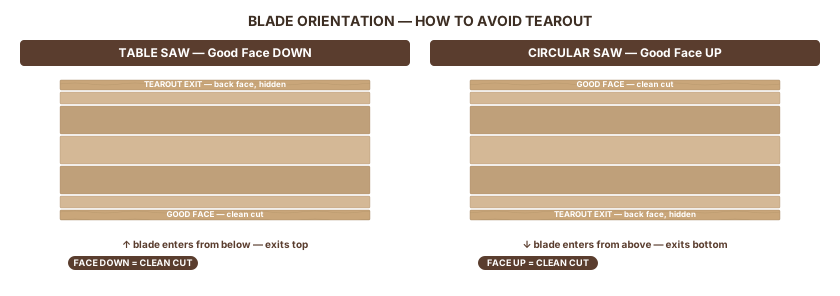
On a table saw, use an 80-tooth ATB (alternating top bevel) blade for crosscuts. Feed at a steady, unhurried pace. Orient the sheet with the good face down: the blade exits from the top, so tearout lands on the back face.
On a circular saw, keep the good face up: the blade enters from above and exits below, putting tearout on the back.
Painter's tape trick: apply a strip of blue tape along the cut line before cutting. The tape holds the fibers together as the blade passes through. Peel it off after.
Sanding — Don't Go Deep
Oak plywood leaves the mill sanded to 150 grit. A light pass with 180-grit paper is all you need before finishing. Oak veneers are approximately 1/42" thick. Sanding to 220 grit or beyond, or using a belt sander, cuts through the veneer into the core.
Sand with the grain, using a random orbital sander or a hand-sanding block. Check for scratches across the grain before applying stain — they show up dark.
Finishing Red Oak (Open Grain)
For a stained and topcoated finish, red oak's open pores are an asset: they absorb pigment deeply and the finished look is rich.
For an oil-based stain: apply stain, wipe off the excess, let cure. No pre-stain conditioner needed. Oil-based polyurethane over oil stain works well and doesn't raise the grain.
For water-based topcoat: the first coat will raise the grain visibly. Woodweb's technical reference on oak finishing recommends either pre-wetting the surface (wipe with water, let dry, sand with 220, then apply finish) or applying a 5:1 water-to-finish wash coat first, sanding it smooth once dry, then applying full-strength finish coats.
For paint-grade: use a grain filler. Apply it with a large brush, squeegee off the excess across the grain, let dry, and sand smooth at 150–180 grit before priming. Sawmill Creek forum recommendations point to Aquacoat grain filler or Behlen Pore-a-Pack as reliable options. Two applications are often needed — check with raking light to see if the pores are fully filled.
Finishing White Oak (Closed Grain)
White oak's closed pores make finishing easier. No grain filler needed for paint or clear coats. Water-based finishes still raise some grain, but far less than red oak. A single light sand at 220 after the first coat is enough.
White oak accepts grey and silver-toned stains evenly. The closed grain handles a light grey wash without pore variation showing through, which is why the grey-washed white oak look is common in contemporary cabinetry.
For furniture applications, hardwax oil (Rubio Monocoat is a popular option) provides a flat, natural look that accentuates the ray fleck in quarter-sawn cuts.
Part 5: Where to Buy Oak Plywood
Home Depot and Lowe's
Both stores stock Columbia Forest PureBond red oak in 3/4", 1/2", and 1/4" sheets. PureBond uses a soy-based adhesive with no added formaldehyde (CARB Phase 2 compliant). That matters if you're building furniture for living spaces.
Expect to pay $65–$95 for a 3/4" sheet of red oak. White oak is available at some locations or for delivery online, usually $10–$20 more per sheet.
What you get at big box: one grade (B-2 equivalent), flat-sawn only, red oak. That's adequate for most projects.
Hardwood Lumber Yards
Hardwood yards stock better grades (A-1, A-2, B-2), both red and white oak, and often carry quarter-sawn and rift-sawn cuts. They can cut sheets to size — useful if you're building a specific project and don't want to transport full 4x8 sheets.
Price runs 10–20% higher than big box, but grades are better and staff can help you pick grain patterns. Call ahead to check what they have in stock.
The Buying Lumber guide covers what to ask and how to evaluate quality at the yard. Everything there applies to sheet goods too.
What to Inspect Before You Buy
Before you pay for a sheet, check it:
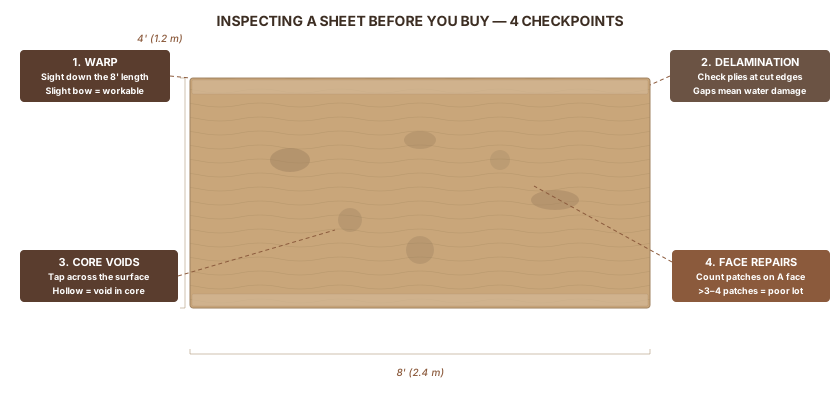
- Warp: Set the sheet on edge and sight down the length. A slight bow is workable; a pronounced curve makes the sheet unusable for cabinet work
- Delamination: Check the edges for layers separating or gaps between plies
- Core voids: Tap across the surface with your knuckle. A hollow sound means a void in the core. The panel will flex at that spot and won't hold screws or dado joints
- Face repairs: Count the patches on the A face. A-2 grade allows some, but more than three or four on a single sheet means a poor lot
Part 6: Where Oak Plywood Fits
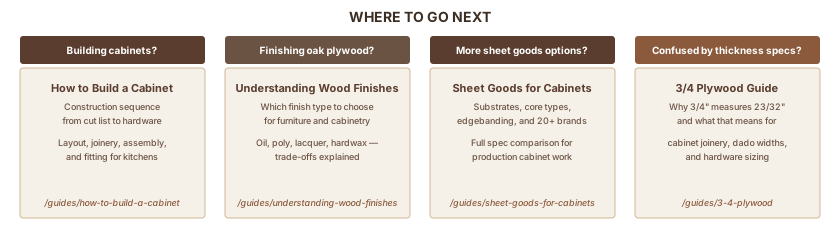
Related guides:
- 3/4 Plywood — Thickness specs, types, and grades for all plywood, not just oak
- Sheet Goods for Cabinets — Deep dive into substrates, cores, edgebanding, and 20+ cabinet panel brands
- Buying Lumber — What to look for at the lumber yard vs. big box; applies to sheet goods too
What to learn next:
If you're building cabinets with oak plywood, How to Build a Cabinet walks through the construction sequence. For the finishing step, Understanding Wood Finishes covers which finish type to choose for furniture and cabinetry.
Sources
These sources informed the species properties, grading standards, veneer cut descriptions, finishing techniques, and pricing data in this guide.
- Ply Supply: Red Oak vs. White Oak Plywood — species comparison and working properties
- Anderson Plywood: Plywood Grading Information — HPVA grade definitions
- Windsor Plywood: Why Builders Love White Oak — tyloses, moisture resistance, white oak properties
- Fifth Wall Designs: White Oak Veneer Cuts — flat, quarter, and rift appearance comparison
- Showplace Cabinetry: Quarter-Sawn vs. Rift-Sawn White Oak — cabinetmaker's perspective on cut types
- Woodweb: Red Oak Finishing Basics — open grain finishing techniques
- Woodweb: Avoiding Raised Grain on Oak with Water-Based Finish — water-based finish technique
- Sawmill Creek: Grain Filling and Finishing Red Oak Plywood — grain filler products and application
- Bertastore: White Oak Plywood Guide — grades, uses, and staining
- Popular Woodworking: Choose the Right Plywood — plywood selection fundamentals
- Osborne Wood: Plain vs. Quarter vs. Rift Sawn — sawing methods explained
- Ply Supply: How to Finish Oak Plywood — finishing overview by species
Tools Used
Up Next
What Is Half Inch Plywood?
WOOD & MATERIALS · Beginner