
Mango Wood at a Glance
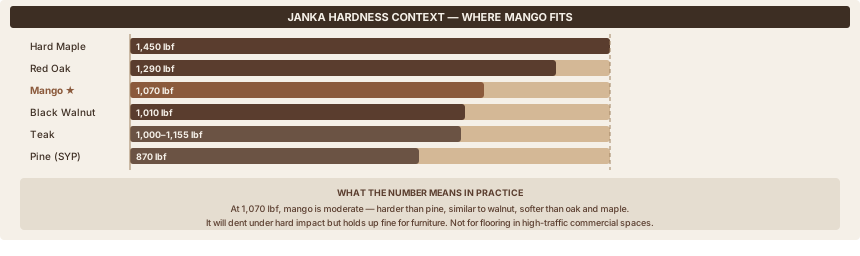
Mango wood (Mangifera indica) is a moderately hard, dramatically figured tropical timber harvested from fruit trees at the end of their productive orchard life — a genuine byproduct of the global fruit industry rather than purpose-felled timber, making it one of the more honestly sustainable tropicals a woodworker can buy. Its Janka hardness sits around 1,070 lbf, comparable to black walnut, with wild interlocked grain that produces ribbon-stripe and bee's-wing figure. Farmers fell spent trees when yields drop, selling the timber rather than burning it, so supply tracks the mango harvest cycle rather than forest clearance. Street price typically runs a fraction of teak or walnut for comparable volume.
| Janka hardness | 1,070 lbf — similar to black walnut |
| Density | 42 lbs/ft³ (675 kg/m³) |
| Shrinkage (radial / tangential) | 3.6% / 5.5% |
| Origin | India (99% of exports), Hawaii (specialty figured) |
| Outdoor use | No — not naturally weather-resistant |
| Price | $15–25/bf rough lumber; more for figured stock |
Part 1: Where Mango Wood Comes From
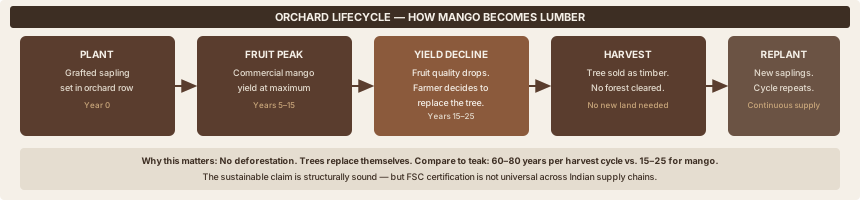
The global mango industry has a waste problem. After roughly 15 to 25 years, a commercial mango tree's fruit yield drops. The flavor suffers. The farmer plants new stock. What happens to the old tree?
For most of modern history: it got burned or chipped. Then the furniture market figured out that aged mango trunks produce beautiful, stable hardwood, and a whole export industry grew up around it.
Today, India grows about 45% of the world's mangoes and ships over 99% of global mango wood exports. The Jodhpur region in Rajasthan is the furniture capital. Trees come from fruit orchards in Uttar Pradesh, Andhra Pradesh, Karnataka, and Gujarat. Timber buyers purchase standing trees from farmers at end-of-production; the trees are felled, sawn, and seasoned to 8–12% moisture content before export.
Mostly yes, with caveats.
The byproduct mechanism is real and well-documented. No forest gets cleared for mango lumber. It grows in existing agricultural land. Trees are replanted after harvest, creating a continuous supply. The orchard rotation is 15 to 20 years, compared to 60 to 80 years for plantation teak. That's a genuine advantage.
FSC Chain of Custody certification exists for mango wood. Anji Mountain, a US furniture brand, sources from FSC-certified operations in Rajasthan and West Bengal. You can verify any supplier's FSC certificate number at info.fsc.org.
FSC certification is not universal. Most small-farm supply chains in India lack it. Growing demand has also created an incentive to cut trees prematurely (before fruit production ends), which breaks the sustainable-byproduct logic. And because nearly all mango wood travels from India to the US by container ship, transportation carbon is the single largest part of its footprint. Sellers focused on origin sustainability consistently understate this.
Mango wood is a better environmental choice than old-growth tropical hardwood. It's not perfect. If it matters to you, look for FSC CoC certification and ask the seller which orchard region the wood comes from.
Part 2: The Wood's Character
Color and Variation
Mango heartwood runs from warm golden brown to reddish-tan, with pink streaks, occasional black or gray zones, and sometimes deep charcoal lines from fungal activity. Under ultraviolet light, some boards fluoresce in the heartwood. It's an unusual trait worth knowing if you plan to photograph finished work.
The variation is wide. Two boards from the same tree can look dramatically different. For turnings, boxes, and small objects, this is a feature. For matched tabletops or large panel work, it's a challenge. Plan to select boards carefully and test stain on same-batch scrap before committing.
Mango darkens slightly with age and light exposure. A fresh-cut board looks paler than a finished piece that has sat in a room for a year.
Grain and Texture
Most commercial mango has straight to mildly interlocked grain, medium-coarse texture, and a natural luster that polishes well. Figured stock near limb junctions and in heavily marked boards tends toward more interlocked grain, which creates the visual drama but also makes machining more demanding.
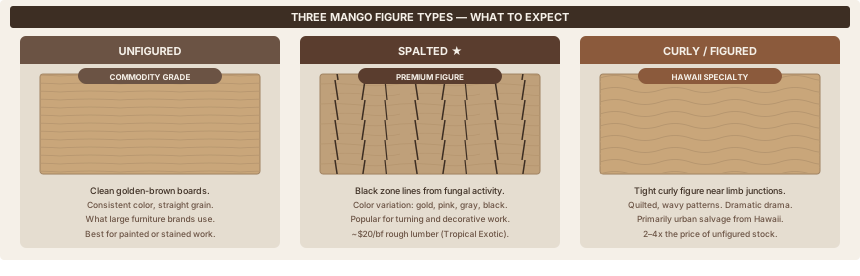
1. Unfigured straight-grained: Clean golden boards with consistent color. This is commodity-grade mango, what you get from large furniture manufacturers. Good for painted or stained pieces where dramatic figure isn't the goal.
2. Spalted mango: Fungal colonization produces dramatic black zone lines and color gradients across the face of the board. Spalted mango is commercially sold as a distinct product category and commands a premium. The fungi responsible are primarily saprotrophic species including turkey tail (Trametes versicolor). This type is especially popular for turning and decorative work.
3. Curly or figured mango: Tight figure near limb junctions, quilted or wavy grain patterns. Most common in Hawaiian-sourced stock, which comes from salvaged landscape and orchard trees. Hawaiian mango plays the same role that figured maple plays among domestic hardwoods: premium, specialty, and priced accordingly.
Part 3: Working With Mango Wood
The One Thing to Know Before You Start
Mango has high silica content, comparable to teak. Silica is an abrasive mineral that dulls blades and bits faster than domestic hardwoods. Plan for more frequent blade changes if you're milling rough stock. Use carbide tooling throughout. This is not a deal-breaker; it's just the tax you pay for working a tropical wood.
Power Tools
Mango machines acceptably well. Standard ripping and crosscutting work fine, with the silica caveat above. The main issue shows up in figured boards: interlocked grain tears out during routing, planing, and jointing. Take shallower passes on figured stock, use a climb cut when routing the edges, and feed slowly.
Reaction wood near knots can also bind the saw or shift during a cut. Go slowly through knotty sections.
Hand Tools
Requires sharp edges. The fibrous, silica-bearing nature of mango punishes dull tools noticeably. One experienced woodworker described it accurately on LumberJocks: "machines fine, hell on hand tools since it is so fibrous." A bevel-up plane, or skewing the iron, helps with tearout in figured sections.
Gluing and Fastening
Mango glues easily. Unlike teak, it has no surface oil problem, so you don't need an acetone wipe before gluing. Standard PVA (Titebond) works without modification. Screws hold well. No documented adhesion issues in the sources reviewed.
Turning
Mango is well-regarded for turning. Moderate density, good detail-taking ability, and interesting figure make it popular for bowls, pen blanks, bottle stoppers, and instrument parts. Bell Forest Products and Cook Woods both primarily sell it as turning stock.
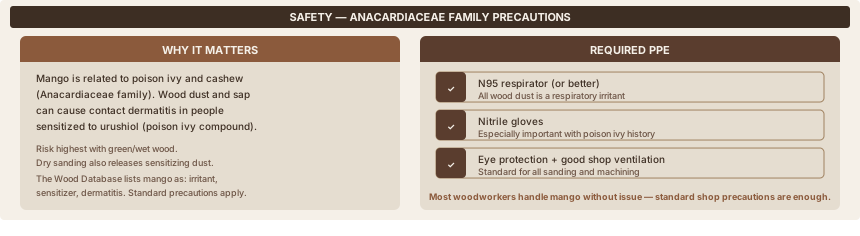
Mango is in the Anacardiaceae family, the same family as poison ivy, poison oak, and cashew. The wood contains phenolic compounds that share structural similarity with urushiol. Woodworkers sensitized to poison ivy have documented cross-reactivity with mango wood dust and sap.
Wear an N95 or better respirator when sanding or machining. If you have a history of poison ivy reactions, add nitrile gloves. Risk is highest when working green wood; dry sanding produces sensitizing dust as well. The Wood Database classifies mango's reactions as: irritant, sensitizer, dermatitis, with sap capable of causing burns.
This doesn't make mango unusable. Millions of woodworkers and furniture workers handle it without issue. Take the standard precautions and pay attention to your skin.
Part 4: Finishing Mango Wood
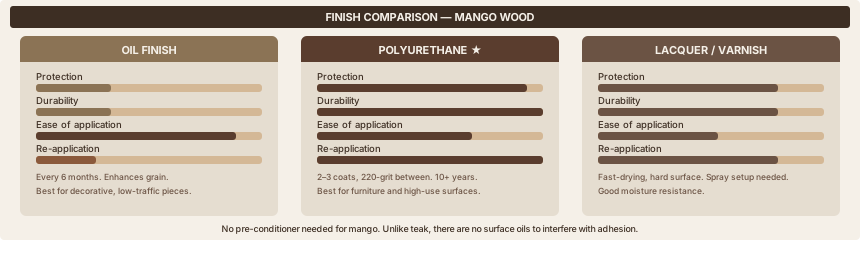
Tung oil and Danish oil both work well and enhance mango's golden grain. The traditional Indian finish is beeswax applied over an oil base. The limitation with oils: they need reapplication every six months and provide minimal protection against water and abrasion. For a decorative piece that won't see daily use, oils are a natural choice. For a dining table, use a film finish.
Film Finishes
Polyurethane is the most durable option for high-use surfaces: two to three coats, sand lightly with 220 grit between coats, and you get 10 or more years of protection. Lacquer dries fast and hard. Varnish provides excellent moisture and scratch resistance. All three work well with mango.
Unlike teak, mango doesn't need an acetone wipe before finishing. The surface is clean and ready.
Staining
Mango accepts stain without a pre-conditioner. It's a true hardwood, not a blotchy pine. Oil-based, water-based, and gel stains all work. Water-based stains may raise the grain slightly; wet-sand with 220 grit or apply a wash coat first if that matters for your finish.
The key practical note: the wood's natural color variation means stain results vary across a board. A honey stain on a pale golden section will look different on a section with pink or black streaks. Always test on a piece of scrap from the same board. For matched pieces, test on offcuts from both boards before committing.
Part 5: How Mango Compares to Similar Woods
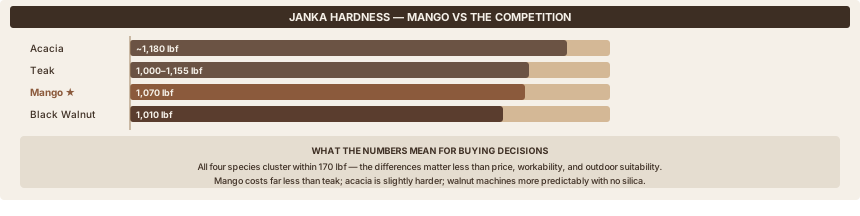
| Mango | Teak | Acacia | Black Walnut | |
|---|---|---|---|---|
| Janka (lbf) | 1,070 | 1,000–1,155 | ~1,180+ | 1,010 |
| Outdoor suitability | No | Yes | Marginal | No |
| Tool dulling | High (silica) | High (silica) | Moderate | Low |
| Price | Low-moderate | Very high | Moderate | Moderate-high |
| Sustainability | High (byproduct) | Variable | Fast-growing | Domestic |
| Best uses | Furniture, turning, carving | Outdoor, marine | Counters, floors | Fine furniture |
Versus teak: Mango is indoor-only; teak is the reliable outdoor tropical option. Mango costs roughly one-tenth of comparable teak. Both dull tools via silica, but mango is easier to carve and turn because it has no surface oil to contend with. For interior furniture and decorative work, mango is the better choice by a wide margin.
Versus acacia: Acacia is harder and denser, making it better for high-traffic surfaces like flooring and countertops. Mango is softer, easier to carve, and more affordable. Both are legitimately sustainable. If you're choosing between them for furniture, mango offers more visual drama; acacia offers more durability. See the Acacia Wood guide for a direct comparison.
Versus black walnut: Hardness is nearly identical: walnut at 1,010 lbf, mango at 1,070 lbf. Walnut machines more predictably (no silica, no interlocked grain issues), and its grain is more consistent board to board. Mango offers more visual drama, especially spalted and figured stock, often at a lower price. For straightforward furniture work, walnut wins on predictability. For turning and decorative pieces where figure matters, mango competes directly. See Black Walnut Lumber for walnut's full profile.
Part 6: Where to Find Mango Wood
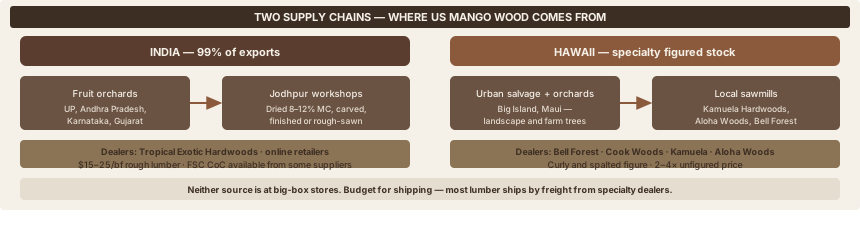
Mango wood is not at Home Depot or Lowe's. You need specialty dealers.
For turning blanks and smaller stock:
- Bell Forest Products (bellforestproducts.com) — Hawaii-sourced, often figured and spalted
- Cook Woods (cookwoods.com) — turning blanks and pen blanks
For rough lumber:
- Tropical Exotic Hardwoods (tehwoods.com) — 4/4 rough lumber, approximately $20/bf spalted mango, Mexico-sourced
For slabs and Hawaii-sourced specialty stock:
- Kamuela Hardwoods (kamuelahardwoods.com) — Big Island urban salvage sawmill
- Aloha Woods (alohawoods.com) — Hawaii-sourced slabs and lumber
Price expectations: $15–25 per board foot for rough lumber. Spalted mango runs toward the top of that range. Highly figured Hawaiian stock can run two to four times unfigured price. Turning blanks from Bell Forest cost $0.80 to $9.00 depending on size.
Commercial furniture context: West Elm carries an extensive carved mango wood line. IKEA's FASCINERA chopping boards are confirmed mango wood. Pottery Barn and CB2 both stock mango furniture. Seeing it in a store and wondering what it is? This is the guide.
Where This Fits
Mango wood is available, reasonably priced, and forgiving, as long as you use sharp tools and a respirator. The silica content and figuring in premium boards push it slightly toward intermediate machining, but for turning and simple furniture work, there's no significant barrier.
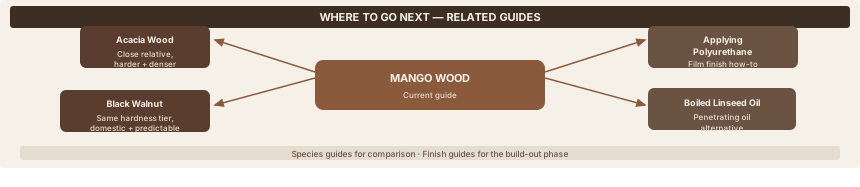
If you're finishing a mango piece, the Applying Polyurethane guide covers the full coat and sand schedule. For a penetrating oil instead, see Boiled Linseed Oil. For a direct comparison of how mango sits against other popular species, the Acacia Wood guide covers a close relative, and Black Walnut Lumber covers the domestic equivalent in hardness and visual impact.
Sources
Research drew on wood database records, specialty lumber dealer documentation, sustainability analyses, trade data, and peer-reviewed medical literature. Sources ordered by first appearance in the guide.
- Wood Database — Mango — Janka hardness, density, shrinkage, and mechanical data
- Wood Assistant — Mango Wood — confirmed technical specifications
- Impactful Ninja — Mango Wood Sustainability — sustainability mechanics, byproduct model, carbon caveats
- Homescapes Online — Mango Sustainability — orchard lifecycle and replanting cycle
- Anji Mountain FSC Journey — verified FSC Chain of Custody example for Indian mango wood
- India Sourcing Network — supply chain, processing, export law
- Volza Trade Data — India 99% of export shipments, US 47% of imports
- Kalani Hardwoods — Mango — Hawaiian mango characteristics, figure types, allergen note
- Bell Forest Products — Mango — Hawaii-sourced figured mango, pricing
- Tropical Exotic Hardwoods — verified spalted mango lumber price
- LumberJocks forum thread — hand tool workability note
- Best of Exports — Mango vs Teak — comparative species data
- Woodworkly — Staining Mango Wood — staining specifics and pre-conditioner note
- Pinky Furniture — Best Finishes — finishing options overview
- PMC/NIH — Anacardiaceae Allergen Study — cross-reactivity between mango and urushiol-type compounds
- Wood Database — Wood Allergies — irritant classification for mango wood
- IKEA FASCINERA — confirmed IKEA mango wood product
- West Elm — Mango Wood Furniture — confirmed major retail use
Wood Species
Also Referenced
Up Next
Is Rubberwood Good for Furniture?
WOOD & MATERIALS · Beginner