
3/4 Plywood at a Glance
The sheet labeled "3/4 plywood" at the store is not 3/4 inch thick. It's 23/32 inch (0.719") after sanding at the mill. That 1/32 inch gap matters when you're cutting dados, setting up jigs, or fitting shelves. Beyond thickness, you're choosing between six types of plywood with different cores, different strengths, and different prices. The right sheet depends on what you're building.
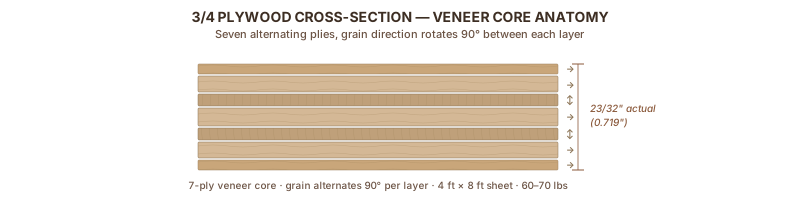
| Actual thickness | 23/32" (0.719") for domestic sanded; 18mm (0.709") for Baltic birch |
| Standard sheet size | 4 ft x 8 ft (most types); 5 ft x 5 ft (Baltic birch) |
| Cheapest option | CDX softwood construction, $45-$55 per 4x8 sheet |
| Best for cabinets | Cabinet-grade birch (B-2) from a lumber yard, $74-$89 |
| Best screw-holding | Baltic birch BB/BB, 13 void-free plies, $80-$110 per 5x5 sheet |
| Best for painted doors | MDF-core plywood, perfectly flat, no grain telegraphing |
In this guide:
- Why 3/4 plywood is not actually 3/4 inch thick
- Six types of 3/4 plywood and when to use each
- How plywood grades work
- Which plywood to buy for your project
- Where to buy and how to inspect sheets at the store
Part 1: Why 3/4 Plywood Isn't Actually 3/4 Inch Thick
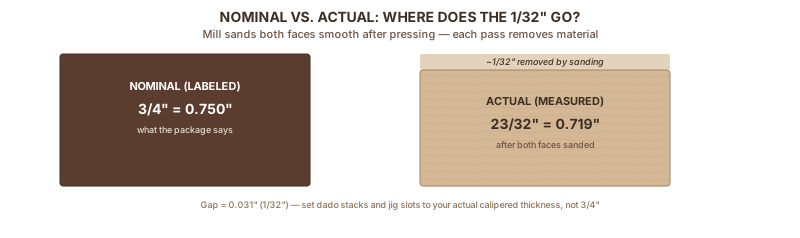
Every type of 3/4 plywood measures less than 0.750 inches. The gap ranges from 1/100 of an inch to more than 1/32 of an inch depending on the type.
Manufacturers glue and press the plies together, then sand both faces smooth. Each sanding pass removes material. A "3/4 inch" panel comes out at 23/32 inch (0.719") or thinner. The [APA's PS 1-19 standard](https://burtforest.com/APA_Grades-Specification_ProductGuide.pdf) permits this. It's not a defect. It's how plywood is made.
Actual Thickness by Type
| Type | Nominal | Actual Thickness | Ply Count |
|---|---|---|---|
| Softwood CDX (unsanded) | 3/4" | 23/32" (0.719") | 5 |
| Softwood sanded (BC, AC) | 3/4" | 0.703"-0.719" | 5-7 |
| Hardwood cabinet grade | 3/4" | 0.703"-0.719" | 7 |
| Baltic birch | 18mm | 18mm (0.709") | 13 |
| Marine (fir AB) | 3/4" | 0.703"-0.719" | 7-9 |
| Import (Chinese, Vietnamese) | 3/4" | 0.687"-0.719" | 5-7 |
Why This Matters in the Shop
Cut a dado (a flat-bottomed groove cut into one panel to receive another) at exactly 3/4 inch wide and slide your "3/4 inch" plywood into it. You'll have 1/32 inch of slop. Enough to see and feel. Enough to weaken the glue joint.
The fix: measure your actual sheet with calipers before setting up any joinery. Set your dado stack to 23/32 inch for domestic sanded plywood, or 18mm for Baltic birch. Three sheets from the same stack can measure differently, so check each one.
This applies to crosscut sleds, box-joint jigs, and any fixture where the plywood fits into a groove or slot.
Part 2: Six Types of 3/4 Plywood
Softwood Construction (CDX, BC Sanded)
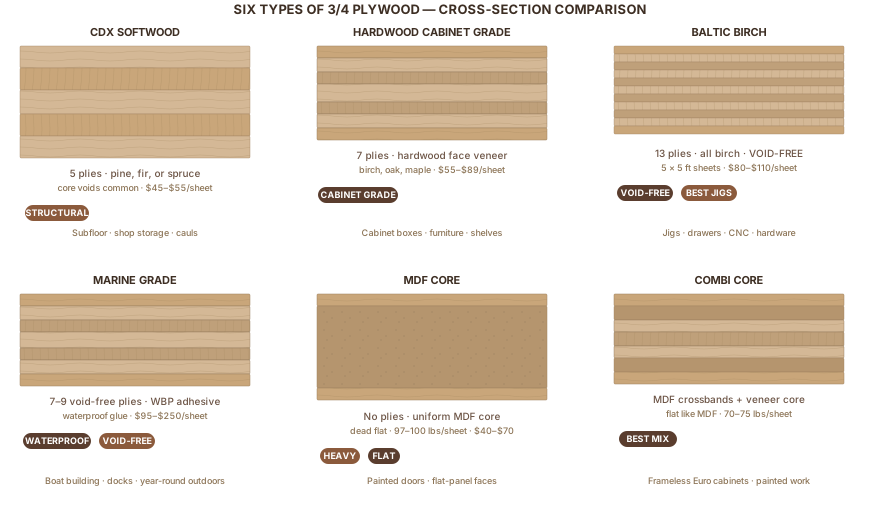
Five plies of pine, fir, or spruce with a rough face. This is the $45-$55 sheet stacked in every home center aisle. CDX means C-grade face, D-grade back, and exposure-rated glue. The "X" is the glue rating, not a quality grade.
Use it for: Subflooring, wall sheathing, garage shelves, shop storage cabinets, workbench substrates, clamping cauls. Anything structural or hidden.
Don't use it for: Cabinet doors, drawer boxes, precision jigs, or anything with visible edges. The core has voids that cause screw failure and show when you cut or route the edge.
Weight: About 60-65 lbs per 4x8 sheet.
Hardwood Cabinet Grade (Birch, Oak, Maple)
Seven plies with a hardwood face veneer (a thin layer of finished wood on the surface) and better core quality than construction grade. Birch is the most common and most versatile. Oak shows strong grain for a natural look. Maple is harder and resists denting.
Use it for: Kitchen and bath cabinet carcasses, furniture panels, finished bookshelves, built-ins.
Why it costs more ($55-$82 at home centers, $74-$89 at lumber yards): Fewer core voids, tighter thickness tolerances (within 1/64 inch), and a face veneer you can stain or finish clear.
Weight: About 65-70 lbs per 4x8 sheet.
Baltic Birch
Thirteen plies of birch veneer with zero voids throughout the core. According to Woodworkers Source's Baltic birch guide, every ply is solid birch, each about 1mm thick. Standard sheet size is 5 ft x 5 ft, not 4 ft x 8 ft. Confirm the size before ordering.
Use it for: Shop jigs (crosscut sleds, router sleds, auxiliary fences), drawer boxes, cabinet interiors needing reliable hardware screw-holding, CNC projects, and furniture with exposed plywood edges. The layered edge is attractive enough that many builders leave it exposed.
Why woodworkers pay more ($80-$110 per 5x5 sheet): Every screw grips solid material. No voids means no surprises. The 13-ply construction resists warping better than 5-ply construction. A jig built from Baltic birch in January still fits the miter slot in July.
Weight: About 71.5 lbs per 5x5 sheet.
Price note: Baltic birch prices spiked after 2022 sanctions on Russian timber. Per Wood Floor Business, sheets that cost $61 before 2022 peaked at $145 in early 2023. Prices have settled to $80-$110 but haven't returned to pre-sanction levels.
Marine Grade
Seven to nine void-free plies bonded with waterproof (WBP) adhesive. The key distinction from regular "exterior" plywood: marine grade plywood guarantees a void-free core, not just waterproof glue.
Use it for: Boat building, dock structures, outdoor furniture that stays in the weather year-round.
Price: $95-$140 for domestic fir AB; $150-$250 for BS 1088-certified okoume. This is specialty material for specialty applications. For most shop and furniture work, Baltic birch provides void-free construction at lower cost.
MDF Core
A medium-density fiberboard (compressed wood fiber and resin) substrate with hardwood face and back veneers bonded to it. No cross-banded plies. The MDF is consistent in density, flat by default, and heavy.
Use it for: Painted cabinet doors, flat-panel doors, any surface that will be painted or laminated. The smooth, void-free surface accepts paint without grain telegraphing through the finish.
Don't use it for: Shelves carrying heavy loads, or anywhere you need to drive screws into the edge. MDF crumbles when screws enter from the edge. Face screw-holding is fine. Edge screw-holding is terrible.
Weight: 97-100 lbs per 4x8 sheet. That's 25% heavier than veneer-core plywood. You'll need help getting it off the rack, and cutting a full sheet solo is awkward.
Combination Core (Combi Core)
Veneer plies in the center for strength, with MDF crossbands directly under the face and back veneers for flatness. You get the flat painting surface of MDF core at 70-75 lbs instead of 100.
Brand names: Columbia "Classic Core," States Industries "Armorcore."
Use it for: When you need a flat surface for painting but can't handle 100 lbs per sheet. Good for frameless Euro-style cabinets that depend on consistent panel thickness.
Weight: 70-75 lbs per 4x8 sheet.
Part 3: How Plywood Grades Work
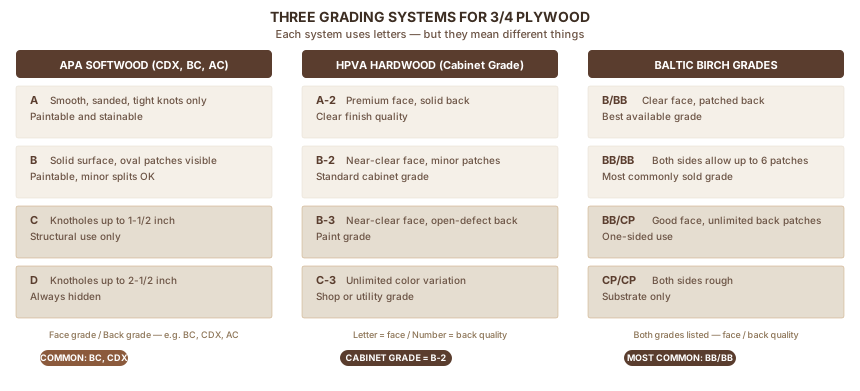
Three separate grading systems apply to 3/4 plywood, and beginners confuse them because they all use letters.
Softwood Grades (APA Standard)
The first letter is the face (show side). The second is the back.
| Grade | What It Looks Like |
|---|---|
| A | Smooth, sanded, tight knots only. Paintable and stainable. |
| B | Solid surface with visible oval patches and minor splits. Paintable. |
| C | Knotholes up to 1-1/2 inch. Splits. Structural use only. |
| D | Knotholes up to 2-1/2 inch. Large splits. Always hidden. |
Common combinations at the store: AC (one good face, rough back), BC (serviceable face, rough back, the standard "sanded plywood"), CDX (both sides rough, structural sheathing).
Hardwood Grades (HPVA Standard)
Face gets a letter. Back gets a number.
| Face/Back | What It Means |
|---|---|
| A-2 | Premium face, solid back. Clear finish quality. |
| B-2 | Near-clear face with minor patches. Standard "cabinet grade." |
| B-3 | Near-clear face, open-defect back. Paint grade. |
| C-3 | Unlimited color variation. Shop or utility grade. |
When someone says "cabinet-grade plywood," they usually mean B-2 hardwood plywood.
Baltic Birch Grades
| Grade | Description |
|---|---|
| B/BB | Clear face, patched back. Best available. |
| BB/BB | Both sides allow up to 6 patches. Most commonly sold. |
| BB/CP | Good face, unlimited patches on back. |
| CP/CP | Both sides rough. Substrate only. |
Part 4: Which 3/4 Plywood for Your Project
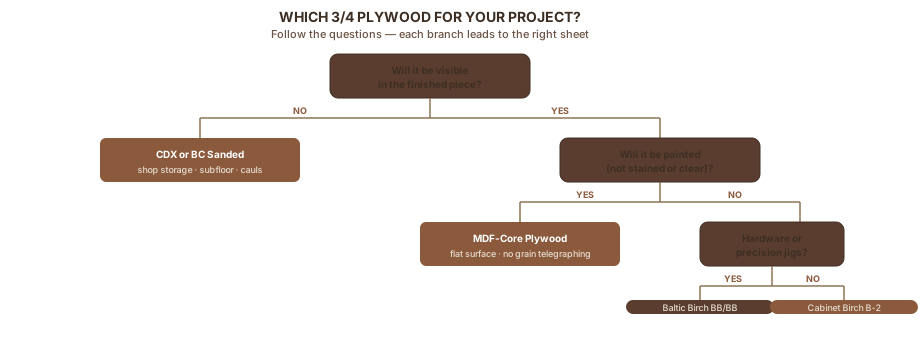
| Project | Best Choice | Why |
|---|---|---|
| Kitchen cabinet boxes | Baltic birch BB/BB or cabinet birch B-2 | Hardware screws bite solid material |
| Painted cabinet doors | MDF-core plywood | Perfectly flat, paint won't show grain |
| Bookshelves | Cabinet-grade birch | Balances cost, strength, appearance |
| Shop cabinets and storage | BC sanded softwood | Budget-appropriate, voids don't matter |
| Shop jigs and sleds | Baltic birch | Void-free, flat, dimensionally stable |
| Drawer boxes | 1/2" for standard; 3/4" for heavy-duty | 3/4" prevents slide screw blow-through |
| Workbench top | Two laminated 3/4" sheets | 1.5 inches total for mass and dent resistance |
| Subflooring | CDX rated sheathing | Code-compliant, cheapest option |
The beginner default: If you're not sure, buy cabinet-grade birch plywood (B-2) from a lumber yard. It's more expensive than construction grade but less frustrating. Fewer voids, better screw-holding, cleaner edges. It works for cabinets, shelves, and furniture. You can stain it, paint it, or finish it clear. It's the safe choice when you're learning.
How Far Can a 3/4 Plywood Shelf Span?
3/4 plywood shelves sag under load, and the sag gets worse over time as the wood fibers permanently deform (engineers call this creep). The WoodBin Sagulator calculates expected deflection based on material, span, depth, and load.
Practical maximum spans for 3/4 plywood shelves:
| Span | Load Capacity | Notes |
|---|---|---|
| 24" | Any reasonable load | Conservative, safe for heavy tools or books |
| 30" | About 90 lbs total | Standard bookshelf span |
| 32" | Moderate loads | Industry maximum for kitchen cabinets |
| 36" | Light loads only | Absolute max for unmodified 3/4 plywood |
| 48"+ | Requires reinforcement | Laminate two sheets, add a nosing, or add center support |
A solid-wood nosing glued to the front edge of a shelf roughly doubles its resistance to sag, according to WoodWeb's cabinetmaking knowledge base. A 3/4 inch x 1-3/4 inch strip of hardwood makes a big difference on a long span. Stiffness increases with the cube of the beam height. Doubling the effective height doesn't double the strength. It increases it eightfold.
Part 5: Where to Buy and What to Inspect
Retailers Compared
Home Depot: Carries PureBond (Columbia Forest Products), which is formaldehyde-free. Quality varies sheet to sheet. The core grade sold at HD may not match what Columbia ships to specialty dealers. Good for painted cabinet boxes if you inspect each sheet.
Lowe's: Carries Arauco (AraucoPly), plantation-grown Radiata pine. Consistently good for construction and shop use. Cabinet-grade hardwood selection is limited in many stores.
Menards: Woodworkers generally rate Menards higher than HD or Lowe's. Better storage practices (sheets stored flat, not on steel arms that bow them). Broader selection in some markets, including Baltic birch. The 11% rebate helps on large purchases.
Lumber yards: Better grades, flat storage, knowledgeable staff, and specialty species (walnut, cherry, maple in multiple grades). You pay more, but you get B-2 or A-2 face grades instead of the B-3 or C-grade face common at home centers. Same brand name doesn't mean same quality. Columbia PureBond from a lumber yard is not the same panel as PureBond from Home Depot.
2024-2026 Price Ranges
| Type | Home Center | Lumber Yard |
|---|---|---|
| CDX softwood (4x8) | $45-$55 | $40-$55 |
| BC sanded softwood (4x8) | $45-$55 | $45-$55 |
| Cabinet birch B-2 (4x8) | $55-$82 | $74-$89 |
| Baltic birch BB/BB (5x5) | Rarely stocked | $80-$110 |
| Marine fir AB (4x8) | $95-$140 | $140+ |
Prices are regional and fluctuate with lumber markets. These ranges reflect 2024-2026 retail pricing across the continental US.
The Five-Point Inspection
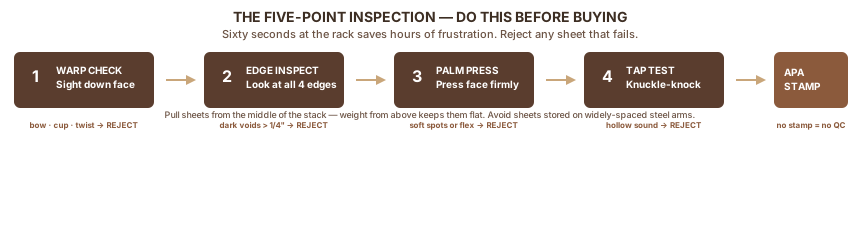
Check every sheet before buying. This takes sixty seconds and saves hours of frustration.
-
Warp check. Stand the sheet on end and sight down the face. Lay it flat and check for rocking. Reject any bow, cup, or twist. A bowed sheet will not flatten under normal clamping pressure.
-
Edge inspection. Look at all four edges. Dark holes or gaps between plies mean voids in the core. Reject if voids are larger than 1/4 inch wide or numerous.
-
Palm press. Press your palm firmly across different areas of the face, especially the center. Soft spots or flex over a 6-inch area mean large core voids underneath. Reject the sheet.
-
Tap test. Knock your knuckles across the face in a grid pattern. A consistent solid sound means good adhesion. A hollow sound in one area means delamination. The face veneer is separating from the core. Reject.
-
APA stamp check. For construction-grade softwood, look for the APA grade stamp on the edge. It confirms third-party quality inspection. No stamp means no quality verification. Especially important for import plywood, where quality varies widely.
Storage tip: If the store racks sheets on widely spaced steel arms (common at Home Depot and Lowe's), the sheets may already be bowed from sitting unsupported in the middle for weeks. Pull from the middle of the stack where weight from above keeps sheets flat.
Part 6: Five Mistakes That Waste Money on 3/4 Plywood
-
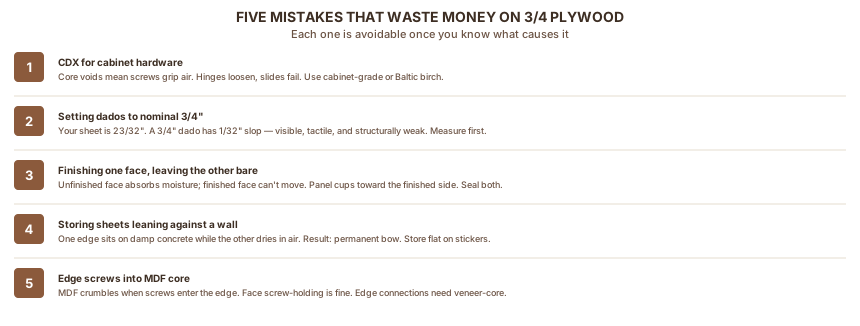
Buying construction grade for cabinet hardware. Voids in the core mean hinge screws and drawer slide screws grip air instead of wood. Hinges loosen. Slides fail. Use cabinet-grade or Baltic birch for anything that takes hardware.
-
Setting dados to nominal 3/4 inch. Your plywood is 23/32 inch. A dado cut at 3/4 inch has 1/32 inch of slop. Measure the actual sheet with calipers.
-
Finishing one face and leaving the other bare. The unfinished face absorbs moisture from the air while the finished face can't. The panel cups toward the finished side. Seal or finish both faces, even if one will be hidden.
-
Storing sheets leaning against a wall. One edge sits on damp concrete, the opposite face dries in open air. The result: permanent bow. Store plywood flat, on stickers spaced no more than 16 inches apart, elevated off the floor.
-
Driving edge screws into MDF core. MDF crumbles when screws enter the edge. The screw thread destroys the compressed fiber. Use MDF-core plywood for faces only. For edge connections, use veneer-core or Baltic birch.
Part 7: Working With 3/4 Plywood
Cutting Clean Edges
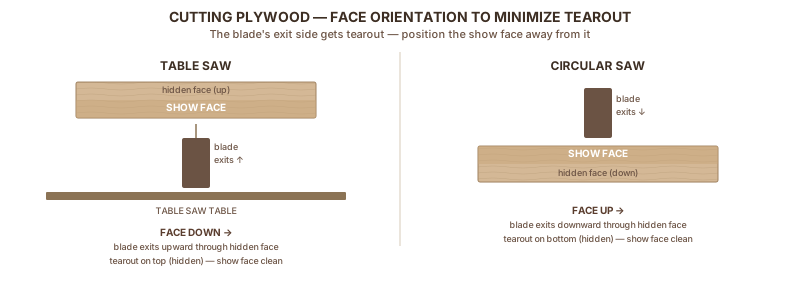
The blade's exit side gets tearout. Position the show face so it exits the blade last:
- Table saw: Show face DOWN. The blade exits upward.
- Circular saw: Show face UP. The blade exits downward.
- Track saw: Either face works with the built-in splinter guard.
For clean cuts, use a 60-80 tooth ATB (alternate top bevel) blade on the table saw or a 40-60 tooth blade on a circular saw. Score the cut line with a sharp utility knife before cutting, or apply painter's tape over the cut line on the exit face.
Joining Methods
Dados and rabbets: The strongest method for cabinet carcasses. A shelf or divider fits into a groove cut in the side panel. The load is supported in shear, not just by glue. Cut the dado to the actual sheet thickness.
Pocket holes: Fast for face-frame cabinets and carcase assembly. Set the jig to the actual thickness (23/32 inch, not 3/4 inch). Space pocket holes every 6-8 inches for panel joints. The screw threads should enter solid core material, not voids.
Edge banding: Iron-on veneer tape covers exposed plywood edges. Available in birch, oak, cherry, and maple at most home centers. Apply with a household iron on the cotton setting. Trim flush with a specialty trimmer or a sharp chisel. For painted work, PVC edge banding is more durable and more moisture-resistant.
Glue + fasteners: Yellow wood glue (PVA) bonds plywood face-to-face at full strength. The joint is typically stronger than the wood itself. But plywood edges are end grain. Glue alone is weak on edges. Always combine glue with a mechanical fastener (dado, pocket screw, or face screw) for any structural joint.
Sources
This guide draws on APA and HPVA grading standards, manufacturer specifications, engineering references, and professional woodworking communities.
- APA Product Guide (PS 1-19 Standard) — structural plywood grading and thickness tolerances
- Inch Calculator — Actual Plywood Thickness — nominal vs. actual dimensions by type
- Woodworkers Source — Ultimate Guide to Baltic Birch — Baltic birch construction, grading, and applications
- Columbia Forest Products — PureBond — formaldehyde-free plywood specifications
- Columbia Forest Products — Core Types — combi core and Classic Core construction
- States Industries — Core Comparison — veneer, MDF, particle, and combi core performance ratings
- Hood Distribution — Plywood Core Types — core type performance comparison data
- WoodBin Sagulator — shelf deflection calculator and engineering data
- WoodWeb — Span Limits for Plywood Shelving — cabinetmaker span rules and nosing reinforcement
- Family Handyman — Plywood Grades — softwood grading system explained
- Family Handyman — Plywood Core Options — core type comparison for buyers
- Family Handyman — Signs Plywood Is Bad — in-store inspection techniques
- EZ Wood Shop — Plywood Grades — APA grade definitions A through D
- Wood Floor Business — Baltic Birch Price Volatility — 2022-2023 price spike data
- Fine Homebuilding — Understanding Cabinet Plywood — edge quality and core type selection
- Rockler — Stopping Tearout on Veneered Plywood — cutting techniques for clean edges
- ThePricer.org — The Cost of Plywood — retail pricing data updated 2025
Up Next
CDX vs ACX vs Marine Grade
WOOD & MATERIALS · Beginner